The title quote is taken from Arnold Bennett’s Old Wives’ Tale, an epic novel of 1908 whose essence can be distilled as the disastrous attempt of a lower middle class family to hold onto former Victorian glories while the structures that supported them are being swept from under their feet. This idea of the tenacity with which people try to preserve a residual culture and its tragic effects on human relationships is also the subject of Deborah Orr’s memoir, Motherwell, which I’ve been reading this month.
My routines have not altered drastically since May. I’m reading, updating social media pages and running around Harray every other day. Happily, I’ve been able to do some socially distant visiting, which is very welcome after the stagnancy of the household’s closed system.
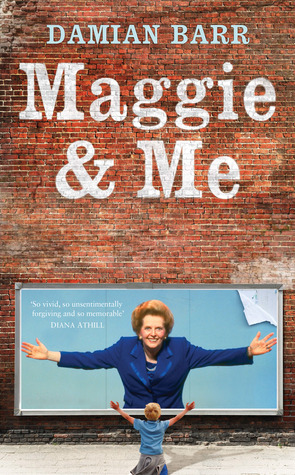
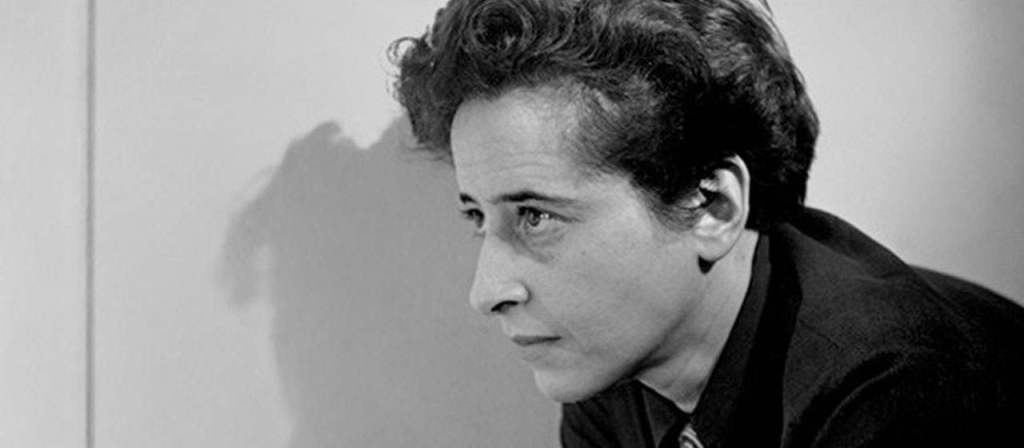
I’ve moved on from the totemic political analysis of Hannah Arendt and made a return to the Scottish childhood memoir genre, which I suppose I first encountered with Amy Liptrot’s Outrun. My current interest though was piqued in February this year by the redbrick cover of Damian Barr’s Maggie & Me standing out from the crowd on the local library’s “featured” shelf.
A great and nuanced take on the Thatcher era from a child’s perspective.
It was at times a difficult read as it tells of the author’s neglect and his abuse at the hands of his stepdad. But despite all that it manages to evolve into something uplifting and even inspirational. One of the book’s great strengths is how it seems to capture the historical moment i.e. Thatcher’s Britain without retrospective over-analysis. Through a child’s eyes this hostile epoch, rooted in uprooted-ness, becomes all the more vivid.
I’ve just finished Deborah Orr’s Motherwell, which I picked because for some reason, at the beginning of the year, I decided to make a list of all the “most anticipated” books coming out and write them in my diary according to the month they were projected to be published. Most I skipped over, and most have been delayed for a couple of months, but circumstances conspired to make me order this one in.
To be honest, I had never heard of Deborah Orr until she died, and the tributes started. All I knew was that people who I respected admired her and that was enough really. She was a journalist, working in print mainly, and seems to have skipped the reporter stage and gone more or less straight to becoming an editor. I can certainly relate to her stories of writers falling through on articles or interviews and her having to take on the job last minute.
The only prior connection I have with Orr is through her ex-husband Will Self, who only gets a couple of sentences mention in this book, which, to be fair, is devoted to her hometown, Motherwell, as the title suggests. I went through a phase at about 15-16 of reading his novels, which I did get some pleasure out of in their exotic vocabulary and absurd plots, despite their general sneering and sordidness. Self’s righteousness and pessimism held an attraction for me at that time, which was also coincidently my Christopher Hitchens YouTube compilation phase, and you can see it just oozing from in that exquisitely cantankerous clip that did the rounds on Twitter last year with the equally cartoonish Brexiteer, Mark Francois.
Orr’s memoir is less direct than Barr’s, less immediate. It seems that she had a revelation about her childhood relatively late in life and is using this as a key to retroactively interpret memories.
Barr’s childhood was truly horrible, but his story is a path to redemption. Orr’s, on the other hand, was ostensibly loving but the psychological seeds were sown there for a toxic relationship to emerge after she left Motherwell for university.
What each book has in common is the working-class experience; in Barr’s case of precariousness and poverty, and in Orr’s of the limitations it placed on the worldview of her parents. These are the mind-forged manacles whereby non-believers were filled with puritanical disgust and outraged that she had written “semi-skilled manual worker” as her father’s occupation on her marriage certificate instead of engineer, which he wasn’t.
The contempt that Orr’s Thatcher-voting parents had for their own class reminded me of Arnold Bennett’s Old Wives’ Tale (1908), which I had to read for my Edwardian literature class in my fourth year of uni. It’s a depressingly familiar story where the father of the house is tragicomically venerated beyond all logic despite the mother’s total control of the household. In the Old Wives’ Tale one daughter, Sophia, rebels and runs away to Paris with a travelling salesman lover living beyond his means to start a new life; she comes to the brink of ruin on account of his lifestyle and then turns it all around by stealing his money and becoming an extremely successful businesswoman. The other, elder daughter, Constance, languishes in her hometown, never leaving, never marrying, watching the world she considered insoluble dissolve before her eyes.
Orr is mostly Sophia. She more or less severed her ties with the restrictive, repressive environment in which she grew up and achieved great success. But, as the final chapter and epilogue make clear, there is still a Constance lurking deep below the surface.
This June has felt remarkably like the last. A lot of doing not very much and feeling guilty, anxious and restless about that. Over the past few weeks, I’ve had to jump start the car a couple of times and I’m sitting here waiting to be shocked into action myself.
Not that the time hasn’t been completely devoid of activity. I’m always keen to remind anyone who asks that I’ve been keeping busy with St Magnus Way and Fursbreck Pottery social media. Orkney Pilgrimage has just launched a crowdfunding campaign to create a virtual Way using aerial drone footage. I hope we can meet our target and secure the £4000 needed, but I have accepted, that to some extent it is out of my control and I can’t drum up community support from nothing. Nevertheless, we’ve already achieved a not-too-embarrassing sum and the 14th of July’s when it finishes.
Yet I can’t get away from the feeling that it’s almost callous to ask for money when everyone’s either in financial dire straits or contributing to protester bail funds and cases probably a lot worthier than this nice, but ultimately unnecessary, extra. The message I’m having to convey is also far from straightforward because it’s not just a donation we’re asking for – it’s also points, and points mean proverbial prizes. For every like and share we get one point and each pledge, regardless of the value, awards us 10. The top six projects get an additional award from the Calor Rural Community Fund.
Arendt’s Origins of Totalitarianism may be read as a companion piece to Orwell’s 1984.
So that’s what I’m “doing” at the moment, but it doesn’t really “occupy” me. What’s been skating around the ice rink of mind is what I’ve been reading, and this happens to be Hannah Arendt’s Origins of Totalitarianism. I am not predisposed to sympathy with her line of thought even before picking the book up. Most theorists of the abysmal Nazi death cult that seized power in the 1930s position themselves relative to Arendt and almost none agree with her. For one, her use of the T-word to describe both Hitler and Stalin (Nazism and Bolshevism as she terms them) is controversial and risks a false equivalence to systems with dissimilar origins, ideologies and moralities.
Arendt’s been on my shelf since Winter 2017/18. I first heard of her when studying the poetry of the Holocaust that Adorno deemed impossible, although it was only in semi-self-imposed loneliness of my British Council teaching experience in Hamburg that I went out and purchased her most esteemed work.
The final year pupils were reading Orwell’s 1984. Their reaction to the text surprised me in that they identified the spectre of Big Brother with Adolf Hitler and did not see the Stalinist allegory that to me is the most obvious historical interpretation of the novel. Fundamentally though, 1984 is about political totalitarianism and I bought Arendt in an attempt to understand the concept in the abstract. In the end, however, I only fished out a couple of lines for a PowerPoint that has since been forgotten. Only now, that lockdown has forced me to confront those tomes only fleetingly flicked through, have I embarked on the task of reading it cover to cover.
About a hundred pages in and feeling the weight of an enormous and emotionally exhausting subject, I stop to consider the circumstances under which it was written. 1951 can’t have been a great time to write anything, let alone a post-mortem of the first half of the 20th century. Everything had been destroyed. In Western Europe, democracy was slipping back into complacency with the half-baked Christian Democrats and toothless SPD. The Eastern Bloc was a sham of liberation. Britain had been a brief beacon of hope before re-electing the arch-imperialist Churchill instead of consolidating a peaceful revolution in social policy. South Africa was half a century from Mandela, colonialism was only gradually, resentfully loosening its grip and segregation was still thriving in the US South.
In such a world pessimism can be forgiven, but one cannot help but feel that Arendt is blinded by proximity to the source. She sees a precedent for the Nazis in everything, even in the thinking of the Jews themselves, her being one of them. Can we say that a survivor’s guilt is projected onto centuries of history? Perhaps. But that’s beside the point. Now, let’s look at the ideas, beyond biography and the historical moment.
Arendt is an honorary member of the Frankfurter Schule which, among many others, tried to tackle the question: why the Jews? As a key element of Nazi ideology, Arendt dedicates the first third of her Origins of Totalitarianism to the development of modern anti-Semitism. In opposition to Sartre’s existentialist treatment of anti-Semitism as a symptom of a confused and frustrated bourgeoisie who must radically simplify the world to contain and comprehend it, Arendt takes a historical approach and examines the Jews’ evolving role in society from the Enlightenment up until her present.
To do this Arendt simplifies and generalises. She speaks to “the conceptual Jew”, which while sympathetic is still an archetype rather than a reality and re-iterates many of the motifs anti-Semites have perpetuated over the years. Arendt deals with the idea of “the Jew” in favour of the experience of everyday Jewish people. Although she provides many powerful insights, her credibility is impeded by this methodology. To accuse a woman of “internalised misogyny” deprives her of the agency to decide how to interpret the world. And it is the same, however, for those who would label Arendt a “self-hating Jew”. This is no pandering to the Gentile crowd here – it is her firm intellectual conviction that the Jews should not be denied self-critique and culpability.
Despite essentialising Jews to achieve her theoretical goal Arendt does not believe that their destiny was fixed; instead, it must be understood historically. The anti-Semitism section is an attempt to write against the laws of history, as she sees it, that lead to a final solution or a communist utopia.
Her book begins with a chronology, starting in the 18th century, following the development of modern anti-Semitic thought in the 19th century and ending with 20th-century totalitarianism, the emergence of which she attaches to the decline of the nation-state. She presents a counter-reading of the Declaration of the Rights of Man (1789), which, in some respects is quite compelling but in others baffling. It claims on the one hand that the French Revolution simply replaced God with Nature as a guarantor of human dignity and on the other emphasises the neglected appendage “and Citizen”, without which the naked human animal, devoid of a political community possesses very little “natural” dignity indeed. Unfortunately, the other part of her argument leans heavily on the arch-reactionary Edmund Burke who preferred the “rights of the Englishman” and rejects the universal ideal of the French in favour of particularism. This ultimately runs into a deep mistrust of human rights and a view that sees the privileges of citizenship in ones own ethnostate as more guaranteed and thus preferable, a logic that leads her to support the creation of a Jewish-majority Israel.
The fundamental claim, however, of the Origins of Totalitarianism, is not an interpretation of anti-Semitism nor an equivalence of Stalinism and Nazism, but that imperialism, which began in earnest at the end of the 19th century contained all the elements that were needed to create these regimes. While, the first section takes the form, in places, of a chronicle that lingers on the biography of individuals such as Disraeli and Dreyfus and devotes many pages to the fictional Jew of Marcel Proust’s À la recherche du temps perdu, this part sets out the core argument. Quite frankly, while of fluctuating interest, this first part of the book and its concluding third on totalitarianism in practice often read like an extended rant, snowballing into abstraction. If designed to answer equally the factors that lead to Stalinism and Nazism, then why is it necessary to devote so many pages to anti-Semitism whose influence was peripheral in the Stalinist worldview?1 The imperialism section is much more focussed, but, even then, does not apply so much to Stalin as it does to Hitler’s ideas.
Arendt is careful not to completely conflate imperialist brutality, even with its concentration camps, racism and expropriation, with the horrors of totalitarianism. She makes clear that what Hitler and Stalin achieved was of another order of magnitude. 19th century European imperialism was also not primarily a German or Russian endeavour. The British and French institutionalised it early on and other nations joined them in the scramble for Africa, with Belgium’s atrocities in the Congo serving as the inspiration for its most striking literary manifestation in Joseph Conrad’s Heart of Darkness. It was in South Africa and the Congo that the Europeans came to know the Horror of which humanity is capable, and, according to Arendt, this practice met with the intellectual framework of Pan-Germanism and Pan-Slavism to create a phenomenon even more sinister in the 20th century.
To Arendt, the totalitarian movements are fundamentally supranational, and she rejects explanations that these were simply hyper-nationalistic regimes. She sees Nazism as sharing Cecil Rhodes’s motto, “Expansion is everything”. The border concessions Hitler demanded in the late 30s were never intended to satisfy his Lebensraum requirements. Dynamism, however irrational, was at the core of the philosophy, as it had been for Rhodes, who wished to “annex the planets”.
Arendt recognises that Hitler went beyond pan-Germanism, although his initial accomplishments conform well to the idea of a community of Germans living outwith the boundaries of the arbitrary nation-state. Put simply, the Volksgemeinschaft was not the master race, but the Aryan SS who were not “the Germans” per se but the Germanic supermen – the purest specimens of Nordic virility.
These theories map less well onto Stalin’s USSR and Arendt, despite writing over 600 pages with copious footnotes, does not adequately justify her argument that Stalin is drawing from a minority of the 19th-century intelligentsia in his creation of the Eastern Bloc and suppression of internal nationalities. For me, that link is highly tenuous.
The final third of the book works as a companion piece to Orwell’s 1984. Like Orwell, Arendt is concerned with more than a political description of totalitarianism and tries to probe at its philosophical implications for “human nature”. Totalitarianism, she says, is at once deliberately built on shifting sands i.e. has constantly changing boundaries and is “limitless” and radically restricts possibilities for individual human beings by depriving them of any true political community i.e. defined/limited other than the movement – the limitlessness.
Written around 1950, Arendt is resigned to the possibility that she may never know the full extent of what went on in the Soviet Union under Stalin. Nonetheless, to my mind, I think she does well in capturing the general atmosphere of that regime. Even if, again, her claims about totalitarianism in the USSR do not easily transfer to the Third Reich.
Resonances with Orwell extend to Arendt’s treatment of memory and empiricism in totalitarianism. Some of my favourite quotations come from this section including, “Power is a direct confrontation with reality”, “Simply because of their capacity to think, human beings are suspects by definition” and “the gift of memory so dangerous to totalitarian rule”. I have little complaint with this section because most of it rings true if you constantly mentally readjust what you’re reading as referring to either the Nazis or Stalinists when she is trying to construct a totalitarian archetype.
Overall, while there is plenty in Arendt that I don’t agree with, it’s not a book I regret taking the time to read in full. It was refreshing to have a historical overview of anti-Semitism rather than an arbitrary list of what’s deemed unacceptable in the current political moment. Arendt’s analysis of imperialism doesn’t much contradict Luxemburg or Lenin, apart from her obvious hindsight that fascism (and in her view, rather illogically, Bolshevism), not this, was the “final stage” of capitalist decay. For Arendt, the totalitarian moment has passed, but she is not reassured by the re-establishing of continental bourgeois democracy2 in West Germany, which permitted Hitler’s rise.
That is not to deny that Stalin was an unapologetic anti-Semite. It just added to his ever-growing list of often mutually contradicting undesirables. Enemies could be labelled “Zionist Hitlerite Trotskyites”, for example.
This is as opposed to the “Anglo-Saxon” two-party, first-past-the-post model that Arendt favours. In her view, this is superior because it converts fragmentary class interests into abstract left and right wing. It is also more democratic in that the opposition is a government in waiting rather than an ill-defined mass of conflicting interests that have to be worked out after people have voted. For reasons other than these I am also sceptical of proportional representation; in my view it tends to debar radical programmes for change. This is, however, a subject for another day.
Last night we were talking about the tin mine at Warbeth. That and the problem geology posed to religion in the 19th century. I thought I ought to have included the mining operation in my Bronze Age spiel for the General Knowledge video series I’m embarking on. One day I’ll do some smelting. I’ve got a blacksmith cousin, so there’s a start.
Big Alex: famous for “mining and conquest”
This past week I’ve been revisiting Adam Smith. Neither the Wealth of Nations nor Theory of Moral Sentiments directly, but through the lens of podcasts and David Graeber’s reading of his works in Debt: the first 5000 years. I’ve reversed into prehistory as far as the video series is concerned and I devoted the final part of three to the origin of money.
My video on money, credit and coinage.
This was a subject that Smith was one of the first to theorise, and his hypothesis resulted in the perpetuation of a myth that money arose from the need to standardise exchange between individuals that had formerly taken place through barter i.e. direct swapping of commodities. Graeber tells us that money, in fact, came into being to keep an account of who owed what to whom (that “whom” often being a central authority and the “what” being tribute). The tribute owed was not goods, but a precise monetary value of however many units – it was just paid in goods equivalent to this.
This is just one example of how challenging these old conceptions can totally derail our understanding of the world. My Early Humanity series looks at a lot of these long-held but entirely unjustified assumptions and tries to show how modern anthropology, archaeology and evolutionary biology has attempted to give us more accurate answers to fundamental questions of our nature.
Are we naturally belligerent?
That’s how I started off when I asked whether warfare was endemic to humanity. I felt it was important to note the major trends of thought on the topic, both religious and secular before I sought scientific answers. Both Judeo-Christian and Greco-Roman traditions approached the dilemma of war in quite similar ways – it was something passed down to humanity from God/the gods. We got caught up in it (Trojan War) or were commanded to do it (the Fall of Jericho). The philosophers Hobbes and Rousseau looked at warfare from an innate behavioural perspective and cast back to a distant past without states, borders or laws. They reached opposite conclusions. Hobbes envisaged an every-man-for-himself type situation whereas Rousseau considered “unaccommodated man” to be essentially peaceful.
Science’s answer to humanity’s natural propensity/disinclination to war is murkier. Chimps, our closest primate relative, make war if we count intraspecies coalitionary killing for the sake of territory and resources to constitute warfare. However, among homo sapiens, when resources are plentiful there is substantial evidence for human kindness and harmony. Prehistoric people cared for vulnerable members of society, tended the sick and valued the disabled enough to include and cater for their additional needs, as evidenced by archaeology.
I take a look at humanity’s dispersal, the spread of farming and the first cities.
My second video in the series talks about human migration from Africa and the diffusion of agriculture across the world. It draws heavily from Jared Diamond’s Guns, Germs and Steel, which explains how geographical factors and not genetics account for the vast differences in technological progress and propensity to colonise among the different peoples of the globe throughout history. I would recommend this to anyone curious about geopolitics. However, I think where it falls flat is in its attempt to apply that logic to history more broadly – where cultural and economic factors are much more prominent than the lottery of geography. A scientific view of history that puts dialectics, class struggle and material relations at its heart is what Marxism has tried to construct, I believe, quite successfully. Class consciousness cannot really be studied without a literate culture thinking and writing about itself. This came with the Axial Age.
According to Marxist theory, between primitive communism and feudalism is a slave society, which, broadly speaking, corresponds to antiquity. The producing class were slaves and the wealth generated by agriculture from the surrounding countryside of a city was distributed among the citizens and, by proxy, the plebs. There existed, however, a proto-capitalist element in ancient societies in addition to the primary “production for use” economy: merchants and foreign trade. It was this external class, destabilising to the closed system of the ancient city-state on whom the great philosophers poured their vitriol.
Another problem that the religious and moral thinkers of the time attempted to tackle was that of money; specifically, a newly invented medium of exchange: coinage. David Graeber explicitly links the novelty of physical metal money to the great intellectual flourishing of this era. His first insight is that the market, arbiter of rich and poor, was a creation of the state and not, as traditionally conceived, in direct opposition to it.
Essentially, cash money came about because rulers needed a way to pay their soldiers. The first priority, once new territory had been conquered, was to seize the mines and begin to stamp metal with the ruler’s seal, which gave it a fixed monetary value. This was then paid out to troops who were told to exchange this with the locals for food. After the conquered population accumulated this coinage, a tribute was levied i.e. taxes, and so the cycle could begin again ad infinitum.
This seems quite unfair to us and it also seemed that way to a lot of philosophers. Hence our major world religions (except Islam) or “intellectual popular peace movements” were born i.e. Buddhism, Confucianism and Christianity. This was, however, essentially a drop-out culture. Reward and retribution were deferred to the next world. The material was rejected for the spiritual.
It’s May. At the end of the month, we could be heading into phase one of lifting lockdown. Had it not been for Coronavirus, the tourist season would be ramping up in Orkney and I’d be fulltime Skara Brae. As it stands my energies have been diverted. I can’t lay claim to anything close to productivity, but I’ve not been idle. Although I’ve not had any events to promote, my social media pages are still going, and I’ve been learning some foundational HTML and CSS online. My main focus over the past couple of weeks, however, has been to build up my own general knowledge on topics I’ve never really given a lot of thought to in the past.
This was triggered after my medical student sister complained that she felt she didn’t bring a lot to the pub quiz team. Her complaint was compounded by the abundance of Zoom call group activities along these lines of late. In real life, she was normally able to avoid embarrassment by using her social skills to select teammates wisely. Onscreen there wasn’t a place to hide.
My Zoom experience so far has been limited to one medieval chant meetup on St Magnus Day in lieu of the cancelled Cathedral event, and an AGM for the Orkney Pilgrimage committee (where I presented the IT and social media report). Not being able to nor having the desire to go much beyond changing my background from a tacky animation of the Northern Lights on the conference call app, I was, however, interested in upping my sibling’s general knowledge; particularly, of history.
This was not really something she was desperately keen to engage with, but following the absence of a firm negative, I set to work in creating a course designed to raise levels of historical awareness. I had done this not so long ago when my dad, who is a teacher, told me that he would be covering World War Two with his primary school class. As a graduate of German, I was very keen that he got the right points across and was able to convey nuance where necessary. My own experience of learning about the Holocaust at that age was definitely formative and drove me to seek to better understand the conditions and culture that had produced it. I, therefore, in a typically superfluous fashion, produced a twelve-part plan with recommended reading, both fiction and non-fiction for each week.
The impact of this I am not sure about, but if it had even a whisper of influence that would suffice. I don’t think he managed to finish his project, as the lockdown kicked in just before the term’s end. In any case, it was more a hypothetical exercise for me – a wish list of books and an intellectual exercise. I was determined that this whole General Knowledge thing wouldn’t go the same way. Creating something tangible with a definite effect was my goal this time, even if it failed to reach the original intended audience.
Thus, I began, dividing the history of humankind into twelve topics, which I would tackle, one by one, reading as I went and creating a maximum of five c. six-minute talks on each. As I type this, I realise that is six hours of content. But I suppose this is a general overview of all of man’s works.
Like with the Second World War project I also compiled a reading list, but this was more for myself than my audience. About one half of this comprised of books and plays I’d read, and the other half was new to me. This gave me a chance to revisit and recommend favourites and acquaint myself with stuff I’d missed out on. I ordered a couple of books on early humanity and filled in the delivery time by starting on Ancient Civilisations. My aim was to primarily cover Greece, Rome and the Americas.
There are some potential problems with that list. It’s pretty Western-centric. Where’s China? What about Egypt? Who gave you the authority to decide what civilisation is? All valid points. However, this is going to be geared towards pub knowledge. I’m also allowing for the fact that these societies didn’t exist in isolation and (with the obvious exception of the Americas) met each other repeatedly.
After studying fiction at university for four years, granted the odd historical text was semi-digested, non-fiction has been a breath of fresh air. Rapidly skim-reading isolated essays to glean the elusive key sentence in a mire of academic-speak is a soul-destroying exercise. Actually, having the time to sit with a decent writer and follow the broad sweep of an argument over several hundred pages is a joy. It’s so much better to read something divested of subject-specific jargon for an intelligent but not necessarily “initiated” audience.
I’m also reading for the first time and going back to some Shakespeare plays – revisiting Coriolanus and leafing through Julius Caesar and Antony & Cleopatra. The In Our Time episode for these three is particularly good. Our perception of historical events is almost always skewed by their reception and Shakespeare’s is, in turn, a firmly contemporary view of the Romans whereby the testimony of Coriolanus’s wounds is analogous to Christ’s and his swashbuckling derring-do an evocation of the Earl of Essex’s reluctance to be integrated into the new political status quo. As the play that Brecht infamously failed to stage, Coriolanus fascinates me. I’d love to put it on. There is so much political potential in it. The tribunes’, ostensible champions of the people, contempt for voters’ “ignorant election” is so interesting and seems to speak to Labour’s divisions over Brexit.
Anyway, ancient civilisations. It’s one of those projects you get at school, well if it’s a comprehensive school, where everything is kind of skimmed over and blended into one. Classical education is something I, and most people, missed out on, although its something you’re expected to have some sizable familiarity with, at least the Greeks and Romans, at uni.
I began with the latter, mainly looking at their cultural legacy. Drama, philosophy and sport were the three things I settled on initially, but I became increasingly interested in Greek political structures as I learnt more, in particular Athenian democracy.
Browsing around I came upon the lectures of Victor Hanson – a highly charismatic American who was passionate about asserting the value of the classics. He was also interested in the reception of classical Athens’ politics. Leftists have embraced Athenian democracy because it was egalitarian and sought to level out society by limiting private property.
There was, however, a catch, in that this was no meritocracy. Office bearers were selected by a random lot drawing from all eligible citizens without regard to ability. Public office was a duty of all free men and not a choice or aspiration.
Most philosophers of the time disliked this. They would rather have seen a technocracy of experts; the rulers as the ablest of the age. In concert with this system, Plato wanted to sow a noble lie that some were born of better stuff than the common man, so that the governed were placated.
The founders of the United States agreed with Plato, in part, that some are born better than others, no matter their “nobility” – therefore they should be entitled to achieve their destiny uninhibited by monarch or government. This model of democracy, that put liberty at its heart, was not that of the Greeks.
An America, but not that of the 1776 declaration does feature in my first series. The Americas before Columbus were unfamiliar to me, but I chose an excellent starting point in a book called 1491 by Charles Mann. In it, he systematically debunks dozens of myths and misconceptions about the pre-Columbian continents.
He starts off with the idea that the Europeans arrived on shores whose landscapes were empty of people and territory untouched by humanity. In fact, the Americas were home to tens of millions of people who had built cities larger than anything in Europe and who influenced their environment profoundly. The great plains had been cleared by Native Americans and the pristine ancient forests were, at least in part, only allowed to grow up because of a lack of controlled periodic burning, which had been disrupted by the dramatic population decline, thought to be as high as 90 per cent.
This happened before the first settlers decided to move inland from the coast because a vanguard of diseases had marched on ahead of them and caused a smallpox epidemic, of which they were totally unaware.
The reading becomes sobering as you learn of the collapse of sophisticated and organised cultures like the Inka at the hands of just a few selfish conquistadors. It seems sad to devote only seven minutes to the collective antiquity of North and South America.
I have made my first video public on YouTube on my personal channel, but I hope to create a new outlet for the series as a whole when I start on early humanity. As it stands, its more a podcast with visual accompaniment but, if anyone out there is an animator/graphic designer willing to work for free then get in touch!
Charles was the first to move in at Hermit’s Croft student accommodation that fateful Saturday in September. His buzz cut look and austere apparel was not the combination of flowing locks and trim overcoats I would become used to over the next four years or so. He was recently returned from a cycling trip around Europe where he had stayed with monks in the Balkans – perhaps it was there that he absorbed asceticism by osmosis?
Those were a blistering few weeks of several hundred introductions. His firm handshake (or would it have been a footballer’s pitch greeting at this Chelsea-supporting stage?) was just one of these and yet perhaps the only one that would tide me through uninterrupted from the first semester to the last and far beyond. We came to Edinburgh from quite different places, and not just opposite end s of the country – he’d been to UCL and reapplied after a gap year with renewed purpose; I’d come naïve and straight from school.
In so many ways he showed me how life could be lived differently and how every part of his was lived consciously – sometimes painstakingly, infuriatingly so. I was able to live more and expand my breadth of experience because of him. We went to events others would dismiss out of hand and he invited me into his life to a much greater degree than I have ever felt accepted by anybody. His presence invigorated me and showed me perspectives I would have otherwise been denied.
Charles at the Elbphilharmonie.
He visited me in Hamburg.
Many probably questioned our friendship. Why would a lefty comprehensive-educated Orcadian like me feel any affinity with an instinctively conservative (but never dogmatic or orthodox) ex-boarding school Londoner? It didn’t make a lot of sense on paper, but it made so much sense in practice. He enhanced me, challenged my prejudices, sought to gain as much as possible from Edinburgh – the city and the university. Charles was interested in everything. Nothing was too trivial or unimportant to him. It was almost inevitable that we gravitated towards each other, although we certainly had our disagreements too, most of which were amicable and constructive.
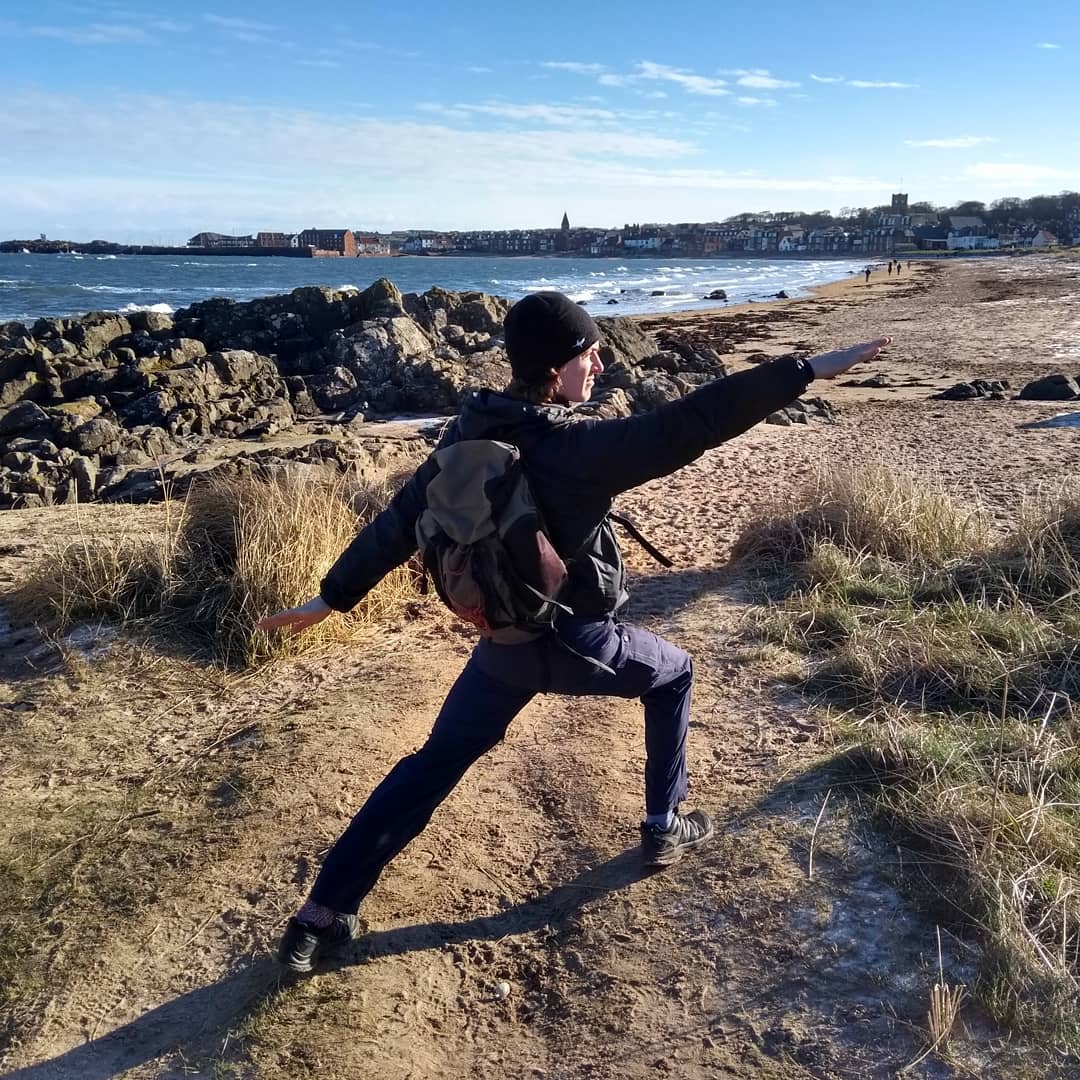
Taken on a spontaneous day trip to the town of North Berwick near Edinburgh.
Our relationship was such that we never felt any burdensome obligation to one another. Charles was principled, as in everything, in his resistance to social media and stood by his belief that it was neither for him nor conducive to a healthy society. When we spoke – through WhatsApp latterly – it was usually to arrange a meet-up or share an article for later discussion in person. After graduation, his preference was a long call every couple of weeks and not constant piecemeal messages. The last time I heard his voice he was deciding whether to stay at his flat or move back in with his parents for the duration of the lockdown. At that moment in time, we were both experiencing a kind of frustrated optimism about the trajectory of our lives, none of us had yet secured graduate employment but each of us had made definite steps to achieve that end.
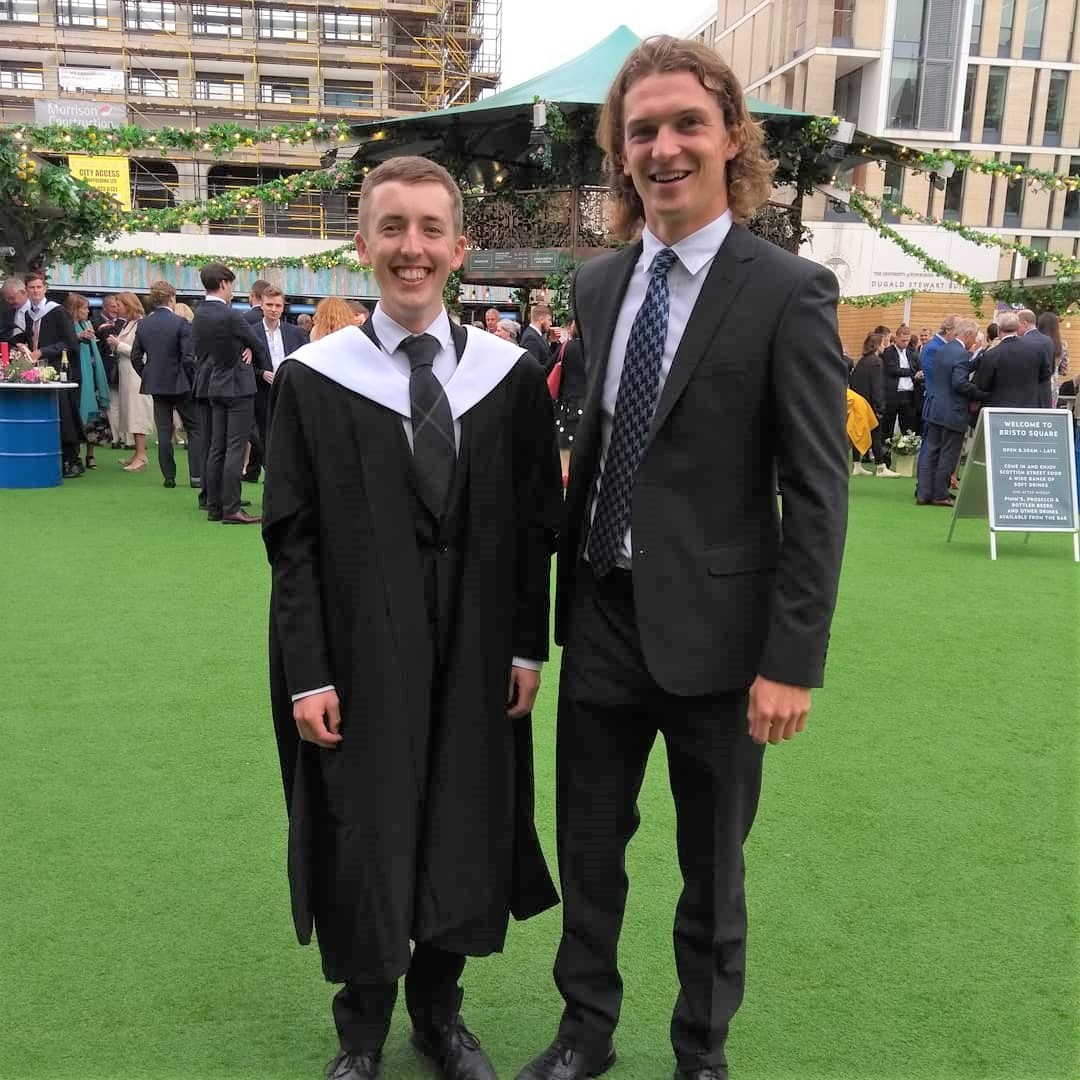
We were able to graduate together when he switched to joint honours Philosophy and Russian.
Charles had so much more to give. In every aspect of his life, he wanted to use his learning – he was not content to learn for knowledge’s sake alone. What has happened is an appalling thing and what makes it all the more galling is the fact that so many people whose lives he influenced for the better will be denied the chance to commemorate for what looks like several months now. He was taken long before his time. At any time, this would be very hard to take but now it is doubly so. If there is any comfort to be taken, then it is in the hundreds who will come to celebrate Charles when the lockdown lifts because he touched everyone who came to know him profoundly.
Another source from which I draw comfort is that he was able to visit Orkney in the summer and I had the opportunity to show him the place where I grew up. It gave me immense pride to see him in awe of what I had come to take for granted and he enabled me to see my home with fresh eyes once more. His sudden interest in the birdlife all about him rekindled in me a childhood passion and it was a real joy to hunker down with puffins on the clifftops at the Brough of Birsay, event to be attacked by arctic terns in the bay of Rackwick on Hoy.
We saw puffins up close.
Whoever had the honour of calling Charles a friend was enriched beyond measure.
It is hard not to dwell on “what ifs” at this time. So many people will have their regrets and hypothetical scenarios playing out in their heads at the moment. We cannot ignore these thoughts but must try and focus on the life he did lead, not the one he was denied.
As with all things right now, consolation must come at a delay. Until then the monotony of existence goes on but we will gather again and come to celebrate the far-reaching impact of his all-too-short life.
“At least now there is something we all have in abundance – time” – one of the truisms of the Corona era. But time is what we’re fighting for now; the Quarry’s been brought in to buy it, to put off the inevitable, to delay and elongate. It’s not in our possession though, not yet. People are scrambling to maintain themselves, to radically alter practices in order to survive – at least where they can. The infrastructure lags behind and innovation can’t fill every gap.
Never been a better time to write – another. There is time but what of it? One needs to have experience in order to process experience. Nothing will come of nothing. Hyperbole is of little value. This is no plague. These aren’t the long dark nights of an Icelandic winter nor Death’s inexorable advance. People just want a laugh. Light entertainment. Netflix in HD – though they might not get that if the EU has its way. Glad we got out of that one when we did.
How far has comedy evolved? Wouldn’t say much. Slapstick probably has the longest shelf-life. We’ll have bodies for a good long while yet, however disappointing that prospect is. Even our future cybernetic incarnations will probably stifle a chuckle at how fragile, sticky and slippery we used to be in smug superiority.
Is this what being on benefits is like? Money rolling in, albeit at a reduced rate, you at a loose end. On the payroll without the prospect of promotion. No. You’re not dependent on the whim of the government. You don’t have to be on the search fulltime. You won’t lose everything because you can’t afford the bus to get to the meeting to prove you exist.
Nothing’s on TV. Nothing’s on full stop. The stream is live though. Microchannels. Pop up broadcasts. DIY shows and the DIY shows but it’s charming. Thrown-together-ness reigns.
Doors open and close without close now everybody’s home. No opportunity’s going to come knocking now. The economy’s tanked thanks to a pangolin.
Messages are trickling in. People are bored and it shows but it’s nice to be thought of on nights like these.
2020 – the season that didn’t happen, the year that didn’t happen – let’s hope not. Hundreds of thousands of excess deaths predicted.
Each day begins with a to-do list, so I’m meeting goals still. Micro goals. Personal. Fursbreck’s likes are steadily climbing. Hitting targets. How far can it go on? We’re aiming to “flatten the curve” but I’m chasing after exponentials.
Everything’s been cancelled. No events on the horizon. No singing, no cycling, no marathon, no open day, no AGM, no speaking course.
Finally, I’m getting some reading done. Ali Smith again. Have I talked about her before? Not on here. She’s from Inverness and has written a tetralogy on Brexit Britain. The first thing I read of hers was Boy Meets Girl. My favourite novel, though, is How to be both, which looks at grief, childhood, art and sexuality from the perspective of 15th century Italy and 21st century Cambridge. Right now, I’m into three of four – Spring. Her characters are impeccable. One’s favourite song is ‘Heroes’ by Alesso, with Adele a close second. How can you write someone with such terrible taste into a literary novel? Here’s how – make them security at an immigration removal facility.
There’s the preternaturally intelligent child motif again; a staple of virtually every novel. The intellectual man who’s not all that. Impossibly brilliant relative or friend who’s newly died. Slightly off activist who launches into lives forcing people to recalibrate. Again, and again, the same characters in new guises, recycled and refreshed like Shakespeare’s Many-Faced God.
People don’t talk about Yarl’s Wood. Yarl’s Wood is a synecdoche. A part representing the whole; a whole system of Yarl’s Woods up and down the length of Britain. One of those things existing as a physical manifestation of rhetoric. And while we squabble over the correct words to use and the soft policy of welcome and hostility; infrastructure, orders, contracts and quotas persist.
I asked at the beginning of this year who would take up the gauntlet thrown down by Alasdair Gray after his death in December 2019. Now I have my answer in Ali Smith, whose synthesis of the Zeitgeist is so potent it makes you want to grab hold of your fellow citizen and shake until they come to their senses. A new age, new cruelties and these somehow the same old brutalities, archive footage of evil soundtracks the documentary of now. Art in the age of mechanical reproduction – repeat, repeat, repeat.
No overtime. No undertime. Contract revoked. Zero hours reduced to nil. Unreal. Dreamlike.
Facebook distributing masks. Vox critiquing for having too few. Why do they even have them in the first place? Multinationals as much and more a facilitator than governments. Nationalise international airlines. Internationalise. We’ve reached the point where language runs out.
I am now a qualified lifeguard. Well, more accurately, I have a lifeguard qualification. I am not currently “practising” as a lifeguard, not yet being paid to guard life as it were.
In my last post, I used the term “self-isolating”. To think that only a few weeks ago that hyphenated pairing held no great significance beyond mind-forged manacles or auto-imposed incarceration. So far, the COVID’s not affected me much personally apart from a couple-of-days course postponement. I’m lucky to have graduated last year and to have been on my year abroad in Germany during the strikes and snow closures.
Bond’s been put off until October. Sad that Billie Eilish track won’t get the momentum it deserves. I think its quite classy. Much better than Sam Smith I have to say.
Yes, the immediate learning of the National Pool Lifeguard Qualification’s done now and I’m looking for the next thing. What form that will take is as of yet unknown.
Right now, I’m trying to be a social media guru. I’ve recently taken up running the Fursbreck Pottery Facebook page. Hopefully, this will be a good opportunity to develop my filming and photography skills.
From April I’ll be at Skara Brae full time. Nine to five, five out of seven. Exhausted at the thought. But to cater to whom? It looks like cruises are being cancelled across the board. Even that relative certainty is slipping away.
Passengers in their thousands ordinarily. The title of that Chris Pratt/Jennifer Lawrence flick of a few years ago. Sci-fi films are the best. Even the shit ones are better. Cosmic horror is my favourite kind. Sickening despair. Passengers had a brilliant five minutes where that was all there was and no way out. In the end, though, it just seemed to live out a control fantasy that it so nearly condemned as irredeemably unethical before serving up the genocide prevention get out clause.
I need a new drive. Remember my Corsa tearing up the drive? And I mean literally. Carving a channel in the chips. As in aggregate, as in one step up from scalpings in terms of coarseness.
Changes are afoot. Not everyone’s returning for season 2. Remember when we used to say series? Netflix’s fault.
Getting along grand with my Gaelic. Well, grander than at first. Not that that’s the same thing. Craic’s Scots don’t you know? Used to be spelt phonetically too. With a “ck” and no intrusive “I”. ‘Tis a Hebridean appropriation to be sure.
And now I’m under no obligation to reprise my role what with this fixed term contract and all. Which I’ve not signed but I’m keen to at the earliest. Guaranteed employment’s not to be sniffed at (or dry coughed at) in this climate.
I’m experiencing the most minimal disruption possible. My only burden’s psychological. And even then, not personal. I just have to live with everyone else getting seriously wound up.
Who knows what will happen come September? Wake me up when September ends.
One thing new in my life; work I can do from home. You might remember my St Magnus Mugs videos from a couple of weeks ago. Well, that led to a gig managing the Harray Potter’s Facebook page – that way if quarantine is enforced, I still have something to fall back on. And I don’t go out that much ordinarily, so self-isolation will come quite naturally.
No, I am thinking long term now. I’ve allowed myself. When September ends. If by the end of September, I am not in graduate employment and/or not on the way to a career in journalism, I think I must return to education. I keep circling around the same topics, returning again to language, history, heritage, old ways, new ways, alternate ways. A speech that is felt, deliberate, of the landscape, part of the environment, not merely stumbled upon, slipped into, dismissed as inconsequential. Am I prepared to unearth forgotten tongues? Rake up myths long-buried? Pan for precious gold in stagnant pools?
Yes, I am, and I will if necessary. It’s beyond contemplation.
Is that coherent though? Does it make sense? The life I’ve led does not add up. But we’re far from the end of the arithmetic.
Right now, there is little for me here. Orkney will forever remain dear to me. Right now, though, it’s also costing me dear. Progression is my top priority. In every aspect of my life. There’s only so far you can move on in the bedroom of your family home.
The year 2020 is in and I am reaching the end of my twenty third on this planet. Will Taylor Swift ever speak to me in the same way?
I think at this stage I should firmly be considered an adult. It certainly feels that way in a classroom dominated by sixteen-year-olds in the St Magnus Suite of the Pickaquoy Centre of a Wednesday evening. Oh, youth with your transient worries, your world-making, world-ending passions, dreams undashed, loves hopeful, knowledge of world-literature embarrassingly scant. Despite TikTok and Thunberg and Teen Vogue, because TikTok and Thunberg and Teen Vogue you are the hope and despair of this earth.
This is the RLSS UK-wide industry standard, internationally recognised, universally regarded, three-week, fast track, qualification that allows us to entrust them with our lives. In case you didn’t get that – I’m training to be a lifeguard, and it’s making me reflect on a few things.
I, like them, could have done this at 16. At school, I was involved in competitive swimming, so it’s likely the club would have contributed to my course fee. But I didn’t. It wasn’t something I wanted to do. I already had a part-time job by then. What was the point?
Ultimately, I was naïve. I used that job as an excuse not to do things, not to see people and eventually I wound down the only thing that gave me a communal identity outwith school and all but quit the swim club.
Swimming gave me so much and our first foray on “poolside” reminded me of those late primary school P.E. sessions. Fraught with anxiety for many, just on the cusp of learning to be ashamed of our bodies, it was a rare moment of ease and confidence for me among those struggling to complete a width that I could speed from end to end in a couple of breaths. Obviously, no-one on the course is that unsure and most are clearly sporty in some other discipline, but they marvel nonetheless at my “natural” ability (I am by no means – just many thousands of hours further in than they are).
It helped me immensely in the transition to secondary school. By my final year at Dounby, I had few close friends, and yes, while there was probably an element of self-isolation in there, I held almost no common interest with my peers. I didn’t like football, fighting or farming – but I did have swimming. That other world to which none of them was privy. It was my one-up on them, my gateway, my escape.
Not that there wasn’t bullying in changing rooms. There was, and I was briefly – for my teeth chiefly, which are still pretty massive despite the best efforts of orthodontists. It’s just that, after they’d got bored of that (and I got braces) it was just an extension of the Stromness playground politics, which I could, largely observe as a neutral. That all-male world was a great environment for stories, which I could only imagine, with my being unfamiliar with many of the major characters and settings in person.
I had friends then, true friends before I’d even got to Stromness Academy – and they were all meeting them for the first time, more or less. Orkney is small – yes, but not that small and you can still see on genetic maps of the place that people really haven’t moved around that much, even on the mainland itself. People from one parish compared to another are distinct and there is real variation in the accent. I had early access if you like – I got to play the beta version and became good at the game prior to release.
Swimming gave me access to secret worlds. I heard radio programmes no-one hears, saw sunsets before anyone else, was the first to crunch my shoe into the brittle frost of winter mornings. Those epic red skies as the town gradually emerged from inactivity are etched permanently on my mind. We would stride out onto concrete inhaling the sweet chlorine-flavoured ether and feel the nip of bitter air on rosy cheeks. And we would always walk together, a cross-year-group coalition, a flock with a collective wingspan beyond the arbitrary division of age and house and set.
I gave that up. Why?
Really, I don’t think I came to terms with that until, in a rut of proportions I had never and have never since experienced, I read Infinite Jest.
Infinite Jest is not what you’d expect from one of the defining works of postmodern literature. It’s about a tennis academy. Well, strictly speaking, it’s about a tennis academy and addiction, obsession and competition. It is about a spiritual void that people try to fill with what comes to hand – sporting talent, academic success, substances, lost causes, TV shows. Many people really get a kick out of “getting the joke” that the novel represents, but for me what stands out above the depravity and clever person’s clever person-type humour is its incredibly accurate description of the world of youth competitive sport.
In many ways, it is utterly brutal. As a teenager, everyone is constantly changing. By a fluke of puberty’s jumping the gun, you’re at the top of the pile for a year or so, then suddenly you’re being beaten where it took you no effort to win before. For the whole of your life hitherto, progress has been natural, effortless and it’s easy to believe the graph’s exponential rise. One moment later, half a second takes a hundred hours to shave off. It is a crushing existence, even to maintain the level of fitness required to equal your personal best. At some point, you need to ask yourself if the rewards are worth it. In most cases, in and of themselves, they are not – but because you’ve already invested so much and built a lifestyle around it, how can you let go and not have your identity destroyed?
That got real, real fast.
As I said, I’m doing a lifeguarding course. I’m also managing the St Magnus Way’s social media channels and doing app maintenance, so give that a like if you’d like.
Artistic blooms tend to be triggered by seismic technological or political change. Where the first Scottish literary “renaissance” arrived as the result of the brutal shock to romantic sentiments the First World War had dealt, a new flurry of writing activity arose on the back of the fateful year of 1979. In March a referendum was held on the question of whether Scotland should have a devolved parliament. The result came out in favour of devolution but was declared invalid because of low turnout. In May Margaret Thatcher was elected as prime minister.
It would be a mistake, however, to align the novels, plays and poems produced in these eras too closely with contemporary events. Rarely, no matter how much I admire H. G. Wells, is literature simply a case of trumped-up journalism. Lewis Grassic Gibbon, for example, was, in Sunset Song, still processing the tumultuous effects of the 14-18 war on Scottish rural life in 1932, rather than reporting on Europe’s rampant fascism. In the same way, Alasdair Gray does not speculate narrowly on the decade of Thatcher that would follow the publication of his debut novel Lanark in 1981. Instead, he focusses on processing the postwar era just as the consensus was beginning to fragment and fall apart. In this, he often risked unfettered nostalgia and his character Jock McLeish in 1982, Janine, as he looks back fondly (with not-so-subtle sexual subtext) on the moon landing, proclaims:
“There was no one point after which things got worse, but my last spasm of scientific, social delight was in 1969” (299).
Gray was much more interested in long term cultural shifts and changes than the novelty of the Thatcher era. This broader, more encompassing streak, alongside his age (his belonging to a different generation), I think set him apart from his contemporaries who came to prominence in this period such as Liz Lochhead, James Kelman, Iain Banks or Irvine Welsh; he was an odd one out even in his cultural “scene”.
To address the 80s, in a novel that sprawled out from what was originally a short story, Gray turned to a character much less obviously autobiographical than the Thaw of Lanark’s first two books. Jock McLeish of Janine is a self-loathing, Tory voting, sexual fantasist who travels the length and breadth of Scotland repairing “instruments” for “the National”. This allows Gray to peer over the city walls and examine the country at large from the perspective of someone who begrudges its existence but is bound to it psychologically in the form of a resurfacing ex whom he cruelly mistreated despite an unshakable love. It is, in my opinion, his greatest work.
What Gray achieved, however, goes far beyond political analysis. His life’s ambition was to do for Glasgow what James Joyce did for London and he was unique in his pursuit of this single-minded goal. Unlike Joyce, however, Gray rarely left his universal city and died not 10 miles from where he was born. He recognised that Glasgow was not “Scotland” and wrestled with his cosmopolitan instincts and his desire for what he called “Home Rule”. On the one hand, he wanted to imagine Glasgow as a Weltstadt but his constitutional goals were too concrete not to allow him an exploration of Scotland’s contradictions; its Highlands and Lowlands, Clydesides and Lothians, Radicals and Presbyterians.
Although we remember Gray chiefly for his prolific writing period in the 80s and early 90s, before that he had an art career in painting public murals and was commissioned to write radio plays for the BBC. When the contracts and projects dried up, he began to sketch portraits of notable Glaswegians and perhaps then began to contemplate his home city as the microcosm that fizzles from the pages of his Life in Four Books. Conjuring an imagined, diabolical and divine Glasgow in his debut novel, he later left his mark physically in the colossal Oran Mor ceiling painting and the refracted architecture of Hillhead subway station.
It remains to be asked, who will take up the gauntlet and write for a new era? A Scotland in transition, having rejected its independence in 2014 and facing down the dismal defeat of Labour south of the border. I am sure that Gray would not embrace despair. He was relentlessly optimistic and believed things could always be improved upon. In writing Lanark, he did not aim to pen the greatest novel of all time for all time; merely, the greatest novel of all time for our time – thereafter to be surpassed and overturned.
I do not think that Gray achieved his goal. Lanark feels too self-congratulatory, too much like a victory lap in the indulgent fourth book. What he did accomplish, however, is worthy of the highest praise and allowed those who came after him to recognise the wretched aspects of modern Scottish living and to dream of a new republic. His politics and plots owe much to his predecessors but in that, he had a distinct lack of concern for originality. He imagined an intensely local form of literature that at the same time refused to be contained within national boundaries, a genre-defying epic unheeding of science fiction, magical realism or the autobiography’s constraints, and parallel universes foreshadowing dark descent and the lure of utopia.
If great literature holds up a mirror to the world, then Gray’s vision was Alice’s looking glass. Fundamentally interested in alternative realities, it is no wonder that near the time of his death Gray was in the process of, in his words, “Englishing” the concluding third volume of Dante’s Divine Comedy – Heaven. It seems that the greats often turn to translation late in life and it seems a testament to the craft that the most brilliant literary lights have such respect for it that they wait until self-mastery before attempting to realise a foreign-tongued genius. Much like the late Tom Leonard’s turn to Bertolt Brecht’s Mutter Courage (a play that follows a vagrant peasant family speaking in the author’s native Augsburg dialect through Europe during the 30 Years’ War) in his final years, Gray took on Italy’s finest writer’s attempt to understand the complexities of his age through various planes of existence in the afterlife. He published Hell in 2018 and Purgatory late last year.
It was not the first time Gray approached world literature, having translated Goethe’s Faust as Fleck in 2008. The influence of German literature can be felt in all of his works especially the stories of Kafka and the psychology of Jung and Freud. Goethe’s epithet, “Wer immer strebend sich bemüht/ den können wir erlösen“ (loosely translating as whoever continues to strive and apply themselves/ we are able to redeem) is the haunting phrase that echoes across Lanark’s concluding chapters. It excellently demonstrates Gray’s belief in the process over the finished product and the obsessive need for constant revision that dragged out a church mural supposed to be completed within a week to a three-year project and caused his debut novel to spend several decades in gestation.
Of course, Gray knew that his work was temporary. In this, I do find partial agreement with H. G. Wells, who said that “all literature is journalism and will pass away in this changing world”. He learnt this the hard way the aforementioned kirk was scheduled for demolition shortly after he completed the mural to which the congregation grew increasingly hostile as time went on. It wasn’t as if all was folly; only most.
In January work began in earnest on my German dissertation. I was comparing the 1950s poetry of two of East Germany’s leading literary figures: Bertolt Brecht and Heiner Müller. The latter had been charged with unoriginality in contemporary criticism of this early work; he was accused of being derivative in form and content and drawing heavily on the former in both cases. Müller, in his mature plays, is regarded as a disciple and worthy successor of Brecht. I was working on examining and challenging these assumptions.
The first of the year was also a month in which I was music editor for the now-defunct National Student and I reviewed several albums throughout 2019 until September – some received in advance via pre-release streams. Of these, one would follow me throughout the rest of the year: Toro y Moi’s Outer Peace. As an album, it’s frustrating because while the standout tracks are excellent, they are surrounded by mediocrity, hence the less-than-enthusiastic score. A personal favourite is ‘Laws of the Universe’, which became a bit of a flat anthem at Summerhall Square.
End of Jan highlight – flat Burns Supper
In February the German department organised a dissertation conference at which I was expected to present my ideas up to that point. This was a very useful exercise in articulating my thoughts and forcing myself to condense, hone and distil the results of my reading into an accessible format. It was also interesting to hear what everyone else was working on – an array of wildly different topics – particularly one master’s student’s German Studies/History of Art joint thesis on fin de siècle satire and Dadaism’s links to the carnival tradition.
March was a mad month in which migraines returned, co-presenters dropped out of radio shows and flights to Belgium were missed, as well as Brexit deadlines. It was then when I started to really develop my argument with regards to the two poets’ mutual interest and divergent interpretations of the Roman satirist, Horace. At the same time, I was looking at political violence in Shakespeare’s Richard II, Henry V and my favourite comedy, Twelfth Night.
April was not quite as stressful a month but was still tense with worry that my handed in coursework would disappoint. There were yet more deadlines to cross and an “oral exam” to survive (this always sounds like I just went to the dentist).
Beyond this, my exam “diet” was surprisingly light, with only two German exams in mid-May.
June was a bit of a limbo month for me. I was waiting out the expiration of my lease of Summerhall Square – a university-owned flat solely for students, waiting for exam results and my degree classification and waiting to hear back from various job applications made in haste against the backdrop of the increasing likelihood of my moving back to Orkney at my fulltime education status’s termination. Although I had one in-person interview for a student recruitment role, I was ultimately unsuccessful in my frantic search for dependable graduate employment and returned to my island home once more with the triumph of a first from the University of Edinburgh and the failure to find concrete next steps warring in my breast.
Likewise, July was defined by the in-between. It seemed that this year I had missed the boat. Somehow it is expected of students also to be on the job hunt while in the most intense phase of coursework deadlines, to devote intellectual energy to the tedium of CVs, personality profiling and assessment centres when to do well at university you’re required to meditate extensively and almost exclusively on your specialist subject. Yet there was a beacon of hope. Not quite resigned to a 2019/20 academic year (and yes I have not given up on thinking of years in terms of semesters yet) in Orkney, I thought it could do no harm to apply for a “summer job” at Skara Brae. To my delight, I was invited to interview – my first face-to-face one in over a month. By this time, I was truly psychologically ready to get working again after uni. It may not have been graduate employment per se and not directly relevant to my studies, but it was a salaried job in which I would get paid to extoll the virtues of my beloved island home to the thousands who visit the UK’s “cruise capital” every summer. Moreover, it was only until the end of September, so I had masses of time to secure my dream job in the city before then…or so I thought.
Graduating in July was nice
By the time I got my PVG checks done and my uniform sent away for and delivered, I only worked one and a half weeks in August. There was a lot to learn but it wasn’t long until I was no longer the newbie and the season began to draw slowly to a close through the next month. A job that was initially about retail sales and crowd management morphed gradually into a relaxed sort of micro-tour-guiding and holiday consultancy.
Also, at that time my first car came into my life – a 2004 Vauxhall Corsa, resplendent in burgundy. It was a necessity, given that the transport links to Sandwick are infrequent and unreliable. We’ve had some good times together, and although there’s no Bluetooth or aux cord, the CD player has only destroyed about half the tracks on Toro y Moi’s 2017 Boo Boo, which has been my constant companion for about five months now plus a newfound appreciation of Radio 1. It enabled me to pick up a waiting job in Kirkwall to supplement my Skara Brae hours. This resulted in an amusing crossover where I would meet those who I’d led around the Neolithic village during the day that evening in the restaurant.
In October I went to my pre-arranged post-season treat concert in Glasgow. King Gizzard & the Lizard Wizard was the best gig I went to last year – they were my top Spotify artist and Infest The Rats’ Nest one of my favourite albums. The rest of that month I was distinctly underemployed, but I started a night class in British Sign Language, which at least occupied one evening a week.
During the penultimate month of the year, I switched second jobs to one that guaranteed me more hours and after a brief trip to see my brother in Edinburgh things began to pick up in both jobs as Christmas party season took hold and a brief festive tourist mini-bloom occurred at the end of December.
I look forward to 2020 with uncertainty but potential. My only real desire is to progress, to advance and not plateau.
Die Physiologen sollten sich besinnen, den Selbsterhaltungstrieb als kardinalen Trieb eines organischen Wesens anzusetzen. Vor Allem will etwas Lebendiges seine Kraft auslassen — Leben selbst ist Wille zur Macht; die Selbsterhaltung ist nur eine der indirekten und häufigsten Folgen davon.





 I, like them, could have done this at 16. At school, I was involved in competitive swimming, so it’s likely the club would have contributed to my course fee. But I didn’t. It wasn’t something I wanted to do. I already had a part-time job by then. What was the point?

 Flett-cetera