These are trying times indeed. I’ve been watching connected criminal proceedings at the Glasgow Sheriff Court as part of my job as a trainee civil litigation solicitor. On the third day observing I had cycled back down to Carlton Place after a 1230 adjournment to allow the sheriff to deal with urgent business ahead of the trial resuming at 2pm. I locked my bike up right outside the court and returned at a few minutes past three to find only the frame of my Genesis CDA 20, sadly without wheels.
Since then my life has been regrettably bipedal (and not two pedals). I was the uninsured victim of my convenient quick release mechanisms. As I write my bike is in the shop and replacement wheels are being fitted courtesy of a Bike2Work scheme voucher (basically an interest free, non-taxable loan coming directly from my salary). At some point next week I should be on the road again.
Luckily, my holiday the following week was not a voyage velocipedal but an expedition…in the sense of a journey on foot. I am continually on the lookout for interesting routes to follow that will take me through country which would otherwise remain undiscovered to me. One such was a newly conceived trail, the Wexford-Pembrokeshire Way which is supposed to approximate the footsteps of St Aidan on his way from Ireland to meet St David in Wales. I had never been to either. Also accessible by rail and ferry rather than flights.
As it turned out, my rail travel to and from Wales was completely free due to delays, so a saving as well. The first passed over the Menai Strait on the way to Anglesey where a battle took place in the summer of 1098 between Magnus Barelegs, King of Norway and two Anglo-Norman earls, both called Hugh. St Magnus, before he became co-Earl of Orkney, travelled in the cohort of the Norwegian king but refused to take part in the fighting, instead praying and signing psalms as arrows flew overhead. Understandably, the king and co were not too pleased with the pacifist Norseman and he fled the battle, taking refuge up a tree until things had calmed down sufficiently. According to the Orkneyinga Saga he spent the years between Angelsey and his ascendancy to the Earldom at the court of Malcolm III, King of Scotland, although this is chronologically incoherent as he died in 1093.
My first destination was Holyhead. From there I would get the ferry to Dublin. The first thing to learn was the pronunciation – not “holy” but “holi” as in holiday. From the train station, I cross the “Celtic Gateway” bridge (you cross it to get the ferry to Ireland). The first thing to notice is the market cross, dedicated to the Glory of God in four languages – English, Latin, Welsh and Irish. I love encountering these in-between border places.
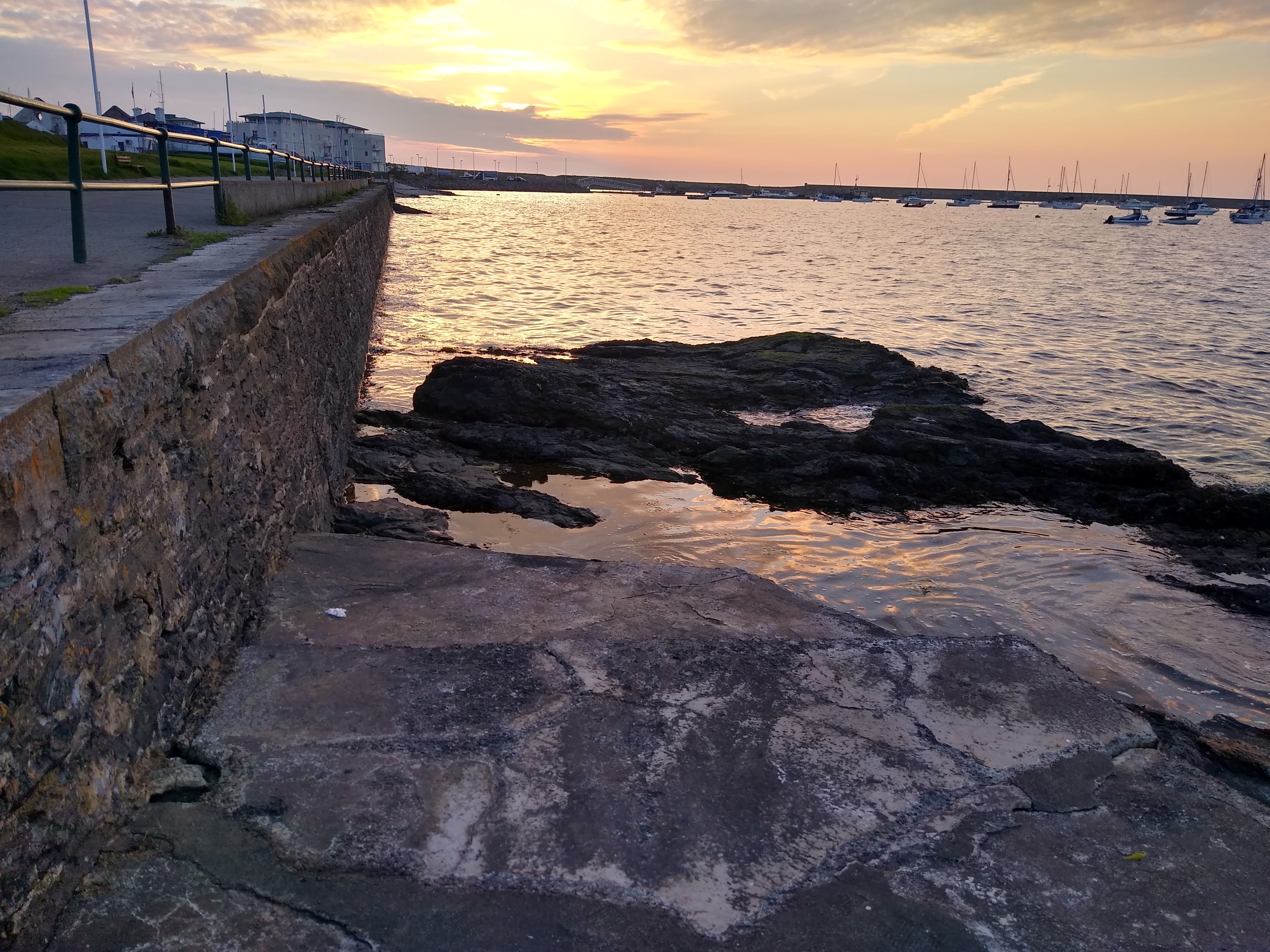
After checking in to my B&B I head back into town and pick up a Thai curry, taking it with me on my walk along the harbourfront as the sun sets. Eventually, I come upon a sunken garden with a picnic table. I enjoy the most picturesque pad Thai I have ever consumed completely undisturbed in the shelter of this botanical hollow.
Dozens of sailing boats populate the marina, suspended in a salty soup of orange and shielded by the colossal arm of the UK’s largest breakwater. Had I been feeling more energetic and had more light to spare I would have bestridden its full length to the clenched fist of its conclusion (or at least till the crook of the elbow).
On my return the water sloshes lethargically against the unyielding walls of the pier; a lacklustre chapping without hope of being let in. Persistent, ill at ease with being so hemmed. I dip my fingers in and have a taste. Yup – salty.
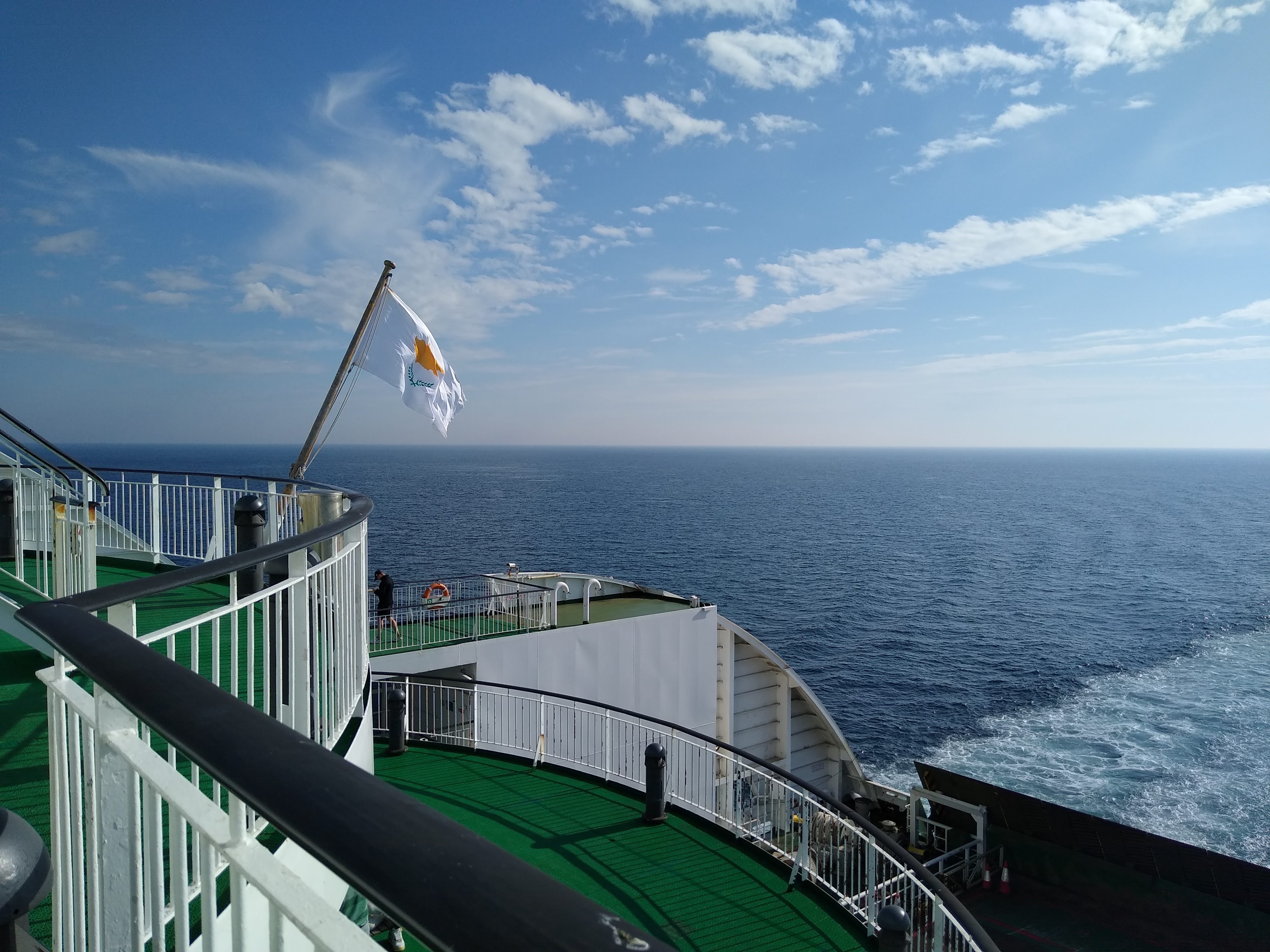
The next morning checking into the ferry I am asked to empty my pockets. I duly decant my raisin snack box.
“What’s that, your brekkie?”
Something like that, I mumbled, though I later bought myself a “full Irish” on the boat as a holiday treat.
Foot passengers were relatively few on this Tuesday morning sailing but they more than made up for their small number with their enthusiasm. From 8.30am they were hitting the bar and stopped only when the shutters were drawn three hours later in port.
The weather was such that “taps aff” may have been justifiable, though it would probably take a brain transplant for me to get into that zone at 9am. There were reports of a particular youth among their number climbing the rigging and having to be wrestled into a lift by his SO.
There was a 30-minute delay in disembarkation for no discernible reason. At this stage, I decided to forgo the connecting bus from the terminal, which was not there to greet us anyway, because I had had quite my fill of the early-starting stags and the ceaseless inanity of their chanting. Thus the first prolonged walking I did on my trip was the half an hour or so out of Dublin port and into the city.
Lunch was accomplished and I set about the task of acquainting myself with the Irish capital as systematically and efficiently as possible. First step: locate the cathedral. I set off in the direction of St Patrick’s – which seemed to be the biggest and no doubt the most historically significant.
On my way there I came across a complex known as Dubliana. It was a Viking and medieval museum. That is my kind of thing, I thought. My brief historical research before coming here was to re-read the parts of the Orkneyinga Saga about Sveinn Asleifarson’s exploits in the city. Sveinn would go on his spring and autumn trips raiding and then return to his farm in Orkney to live off the plunder the rest of the year. Concerned about the chaos he was causing, the Earl asked him to give up this pastime. Sveinn reluctantly agreed but not before “one last trip”. This took him to Dublin where he managed to capture and hold the city for a number of days, terrorising the locals into giving up all their treasures. None too pleased with being so imposed upon by this Orcadian and his private army of Vikings, the Dubliners laid a trap for him and his men by covering deep pits with rushes and reeds and luring them to the spot. Inevitably, the reeds collapsed and the raiders were stabbed to death in the pits where they fell.
Despite his ignominious end, Sveinn is named by the narrator of the saga as one of the greatest men in the Western world. I think that by “great” we can assume they do not mean virtuous and I think the Western world would probably refer to the Norse lands west of Norway rather than Christendom in general.
Anyway, after spotting a re-enactor I came to the conclusion that the museum was mainly for kids and it would probably be a bit strange for a lone 27-year-old to be going about in that crowd. However, it was to prove not to be the only encounter with re-enactors on my trip.
Instead, I chose historical survivals over revivals/reprisals. Before St Patrick’s I came across Christchurch – Dublin’s oldest place of worship, dating back to Norse settlers in the 1030s. Like Glasgow Cathedral, however, it is primarily a building from the 13th century. I was sold by the promise of an intact medieval crypt – properly underground as opposed to GC’s sloping lower church.
The first artefact catching my attention was the heart of Laurence O’Toole (a 12th-century canonised bishop) who is the patron saint of the city. It stands on a plinth in a side chapel encased in iron cast in a weirdly cartoonish love heart mould.
Moving round I learnt about Strongbow and the Norman invasion of Ireland during the 12th century (it took them some time after 1066 to cross the Irish Sea). Norman influence on Ireland was not something I’d given a great deal of thought to before my trip. There is some ambivalence about Norman heritage here because while they developed the country and left it with cathedrals, castles and increased administrative sophistication, this was also the start of hundreds of years of overseas domination from Great Britain which it was only able to fully shake off in the 20th century.
The crypt was extensive but overall much cruder than Glasgow’s unique lower church. It is more of a basement than an inner sanctum. Yet I rather enjoy the higgledy piggledy quality of the masonry – more human than divine.
The first thing you are struck by when you enter are two battered and bewigged statues. These are the two Carolingian kings prior to our current Charles. The controversial figures (to put it mildly) look as though they’ve been thrown around, and have chunks and chips taken out of them indiscriminately. They flank a giant, stone-hewn coat of arms. This was not to be the only reminder of the conflicts of the 17th century on this trip.
On display is a contemporaneous copy of the Magna Carta and an Irish-adapted Magna Carta Hiberniae of 1217 where Dublin is in place of London. It remains on the statute books to this day.
Most bizarrely, there is a mummified cat and mouse supposedly fossilised mid-chase in the de-oxygenated environment of an organ pipe. James Joyce wrote a line about them in Finnegan’s Wake referring to a rat – not a mistake, the original rodent was replaced at some point mid-century.

After Christchurch, I decided to visit the Museum of Literature or MoLi for short, after Molly Bloom of Ulysses fame. It was enjoyable enough although literature is best experienced on the page or stage really and not displayed as a cultural artefact. It was a Joyce museum primarily, and I am a Joyce fan but I think there are other Irish writers who deserved more space. I caught 20 minutes of the free national archaeological museum, which contained a lot of gold, then headed somewhere to do as the Dubliners do and have a pint of Guinness and some Irish stew.
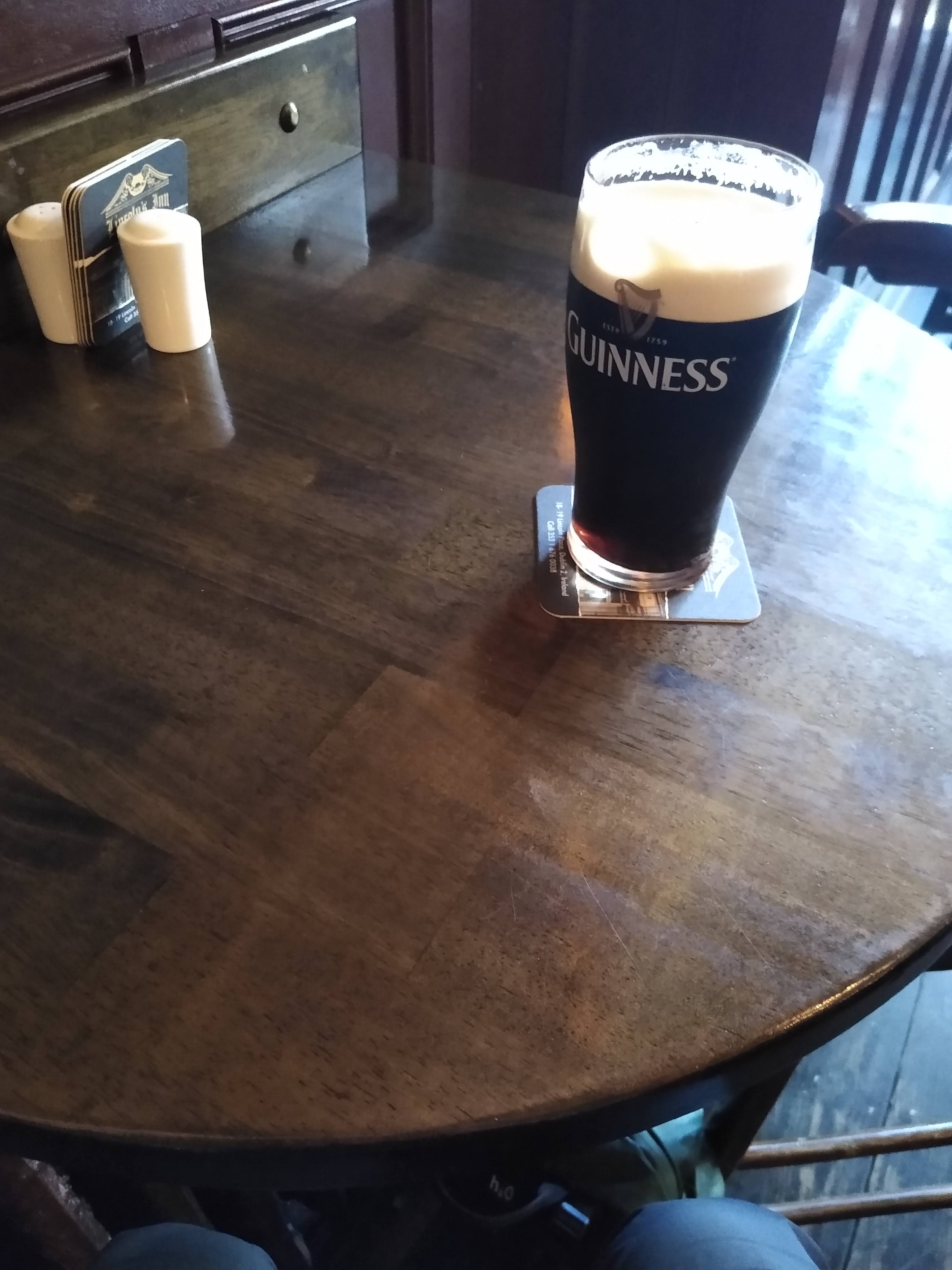
This was an early dinner as I was getting the bus at 6.15pm. The bus was delayed about 20 minutes and when it did come the first thing the driver announced was that it was pre-booked tickets only. Oh well, I thought, I’ll just get the next bus. Alas, the next bus was all booked out too. The only bookable one was the one after and only due to get into Ferns, the start of my walk, at 10.25pm. Reluctantly I booked it and made my way out to the nearby park for a stroll to kill time.
Oddly enough, the park was abuzz. Tents, benches, stalls – a tightly policed beer garden. I had stumbled upon a literary festival.
Listening to some poets and authors reading extracts killed an hour, then I returned to the bus stop, aiming to see if I could get on this one, possessed as I was now of the all-important QR code.
Sitting there on the pavement was the tanned bespectacled man I’d noticed from among the knocked-back before. I asked him if he was trying his luck too – he was. Then he proceeded to give me a tour of the surrounding area in gestures and anecdotes historical and contemporary. He was a barrister and soon enough he found out I was in the law too.
Happily, we were allowed on the next bus and he provided me with stimulating conversation for the duration of the hour’s drive to Ferns. I learnt that Ferns was the former capital of Ireland back when it had a High King. Now it is a very small place without much of a hint of its former glory. Its fate, in this sense, is similar to that of Scone, once the crowning place of Scottish kings.
Ferns-Oilgate-Wexford
Ferns had little in the way of accommodation options, so I was staying in a B&B two miles from the bus stop. Coming in at 10pm, I was offered and accepted a lift in a profusely apologised-for farm van.
At breakfast, I met a retired Dutch couple doing a motorbike tour of Ireland and a lady splitting her time between Connecticut and the south of France. Kindly dropped off in the village of Ferns, I began the journey almost immediately – I had a lot of ground to cover on Day 1. My goal was Oilgate, although I was assured that Wexford itself was doable as it was only a 25-minute drive.
Reader, it was not and my planned goal was certainly sufficient based on following two legs worth of the Wexford-Pembrokeshire Way following the Outdoor Active app almost to the letter. The Ireland part of the route is mostly on roads. Regular readers of this blog will be apprised of my stance on pilgrimage via highway already but for the unfamiliar my view is generally negative. These were country roads for the most part, however, and traffic was graciously light, rural Ireland being considerably more sparsely populated than the south of England. There were fewer hedgerows to contend with certainly and fewer explicit reminders of private property, though I was met with barks as I strode past virtually every house and that does tend to remind one of exclusive ownership rather insistently.
The highlight of Day 1 of walking was probably the barely trod back road up the side of Oulart Hill. My final destination was less impressive. Oilgate is a linear settlement built along an A road, or, as in Ireland an “N” road, presumably for National. It is a fast one certainly, approaching a motorway though not a dual carriageway. So, not exactly a historic town. I didn’t hang about too long and after learning of Ireland’s recognition of the state of Palestine and the UK General Election on 4 July, I boarded the bus for Wexford itself where I’d be staying for the night.
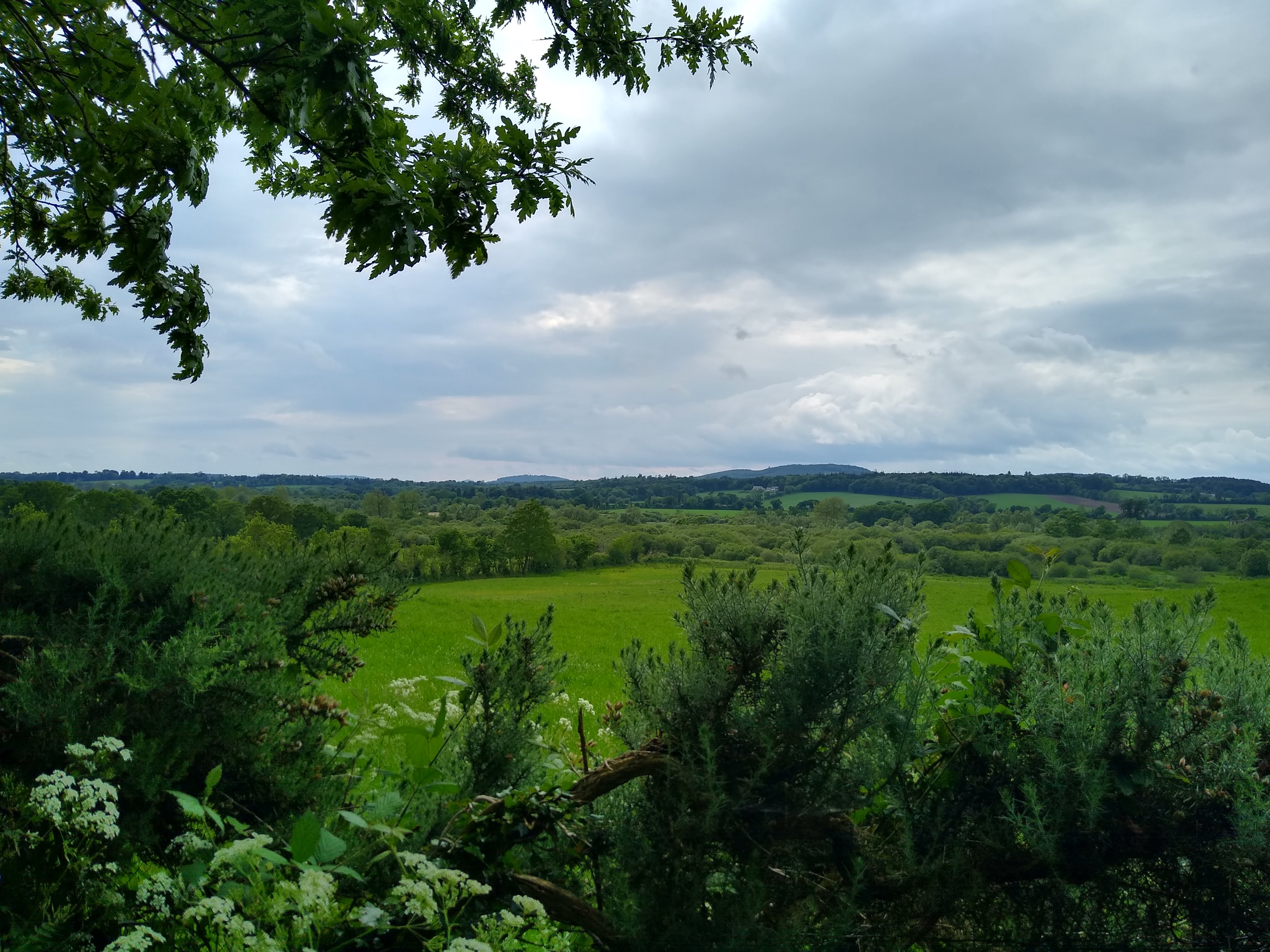
I visited The Crust on the recommendation of the barrister and explored Wexford’s fortified wall. It was improved in the mid-17th century during the Confederate Wars. While England was occupied with beheading Charles I (and the Scottish Covenanters were supporting them then backtracking after Charles II promised to introduce Presbyterianism across the British Isles) Ireland had declared a Confederacy in opposition to Cromwell. It made sense to revamp the ramparts on its eastern coast.
Wexford-Killinick-Our Lady’s Island-Rosslare-Fishguard
Thursday was a lighter day. Oddly enough, the Wexford-Pembrokeshire Way does not actually pass through Wexford itself – that is, the city of Wexford. It is named the WPW for County Wexford. Therefore, I reasoned I should rejoin the route somewhere along its length, getting transport to the start for the day. It so happened that there was a direct bus route to a place called Killinick, so I started my day’s walk from there.
I did not go to the ferry direct. I went via Our Lady’s Island. This is a site of medieval pilgrimage. The virgin Mary herself is not claimed to have appeared there but people came away from the island cured after their penitential circuit round and praying to her.
Our Lady’s Island is not really a complete island. It is connected by a natural gravel causeway and situated within a lagoon separated from the sea by a sandbar which is cut annually to drain excess freshwater – a tradition going back to at least the 1680s.
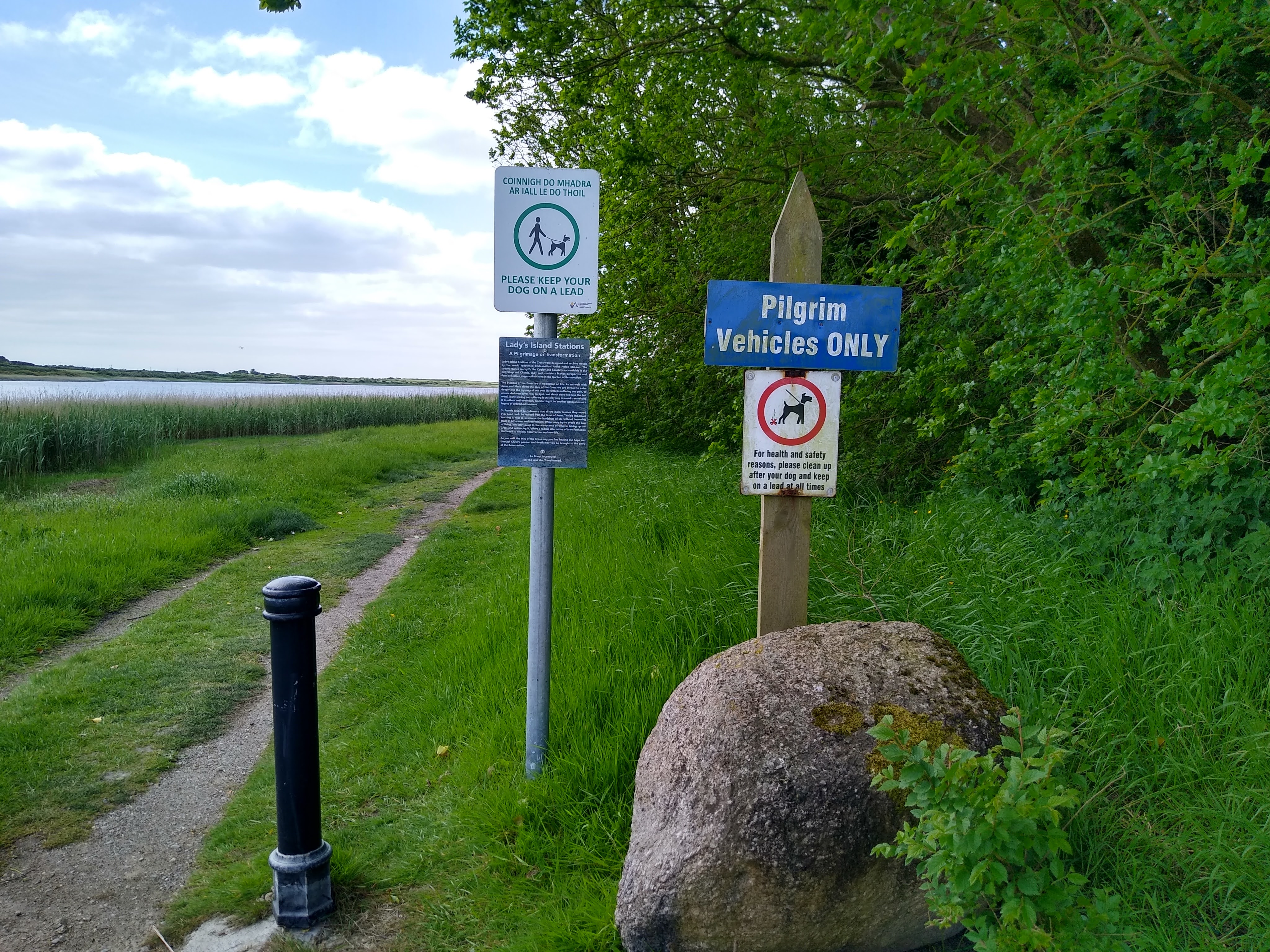
From Our Lady’s Island, we have some rare off-roading through a couple of fields past a Marian well then back on backroads to Rosslare harbour for the ferry back to Wales. This time my destination was a town called Fishguard. There are only two sailings a day – one at 7.30 am and one at 7.30pm. I go for the pm one but this means I am still a couple of hours early for the crossing.
I decide to explore the clifftop path – a taster for tomorrow’s Pembrokeshire Coastal Path. I read all the tourist information notices and found a sunspot to read a few chapters of Zola’s Germinal. This is where I got most of the windburn/sunburn on my trip.

Having three hours to kill, I tried reading more Zola on the ferry. The atmosphere was rather chatty and I could not help but overhear a group of American exchange students conducting a social survey with an Irish traveller couple. I admired their optimism and willingness to engage so undauntedly with strangers. Therefore, after obtaining some overpriced fish and chips in the onboard restaurant, I went over to introduce myself and that helped kill at least two of the three hours at sea.
Again, we were delayed in disembarking half an hour. From there it was a further half-hour powerwalk in the dark to my Fishguard hostel accommodation. I was greeted by a somewhat disgruntled host and asleep within 10 minutes of setting foot in the door.
Fishguard-St Davids
I went upstairs to find a couple in their 50s at a dining table with only two chairs. We were the sole guests. The host offered apologies for his ill-temperedness the night before and I offered my own for my lateness.
I accepted a coffee and joined in some small talk as I stood and waited for the dining table to become vacant. Through the conversation, I learnt that only two people had died doing the Pembrokeshire Coastal Path since its inception half a century ago. The host’s late father wrote the guidebook.
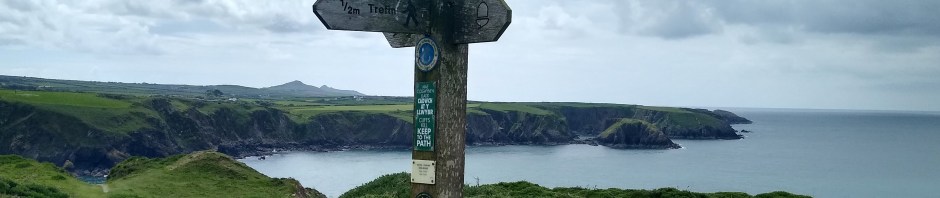
The WPW pretty much exclusively uses the PCP in Wales. However, as I had only allocated myself a day in Wales, doing its entirety was not feasible. I therefore shortened the route in two places. Firstly, cutting out the northern peninsula from Fishguard and taking a more direct route to a place called Melin Tregwynt and secondly, cutting in from Trefin and taking the road from there to St Davids. Between these two shortcuts would be three hours of the Coastal Path.
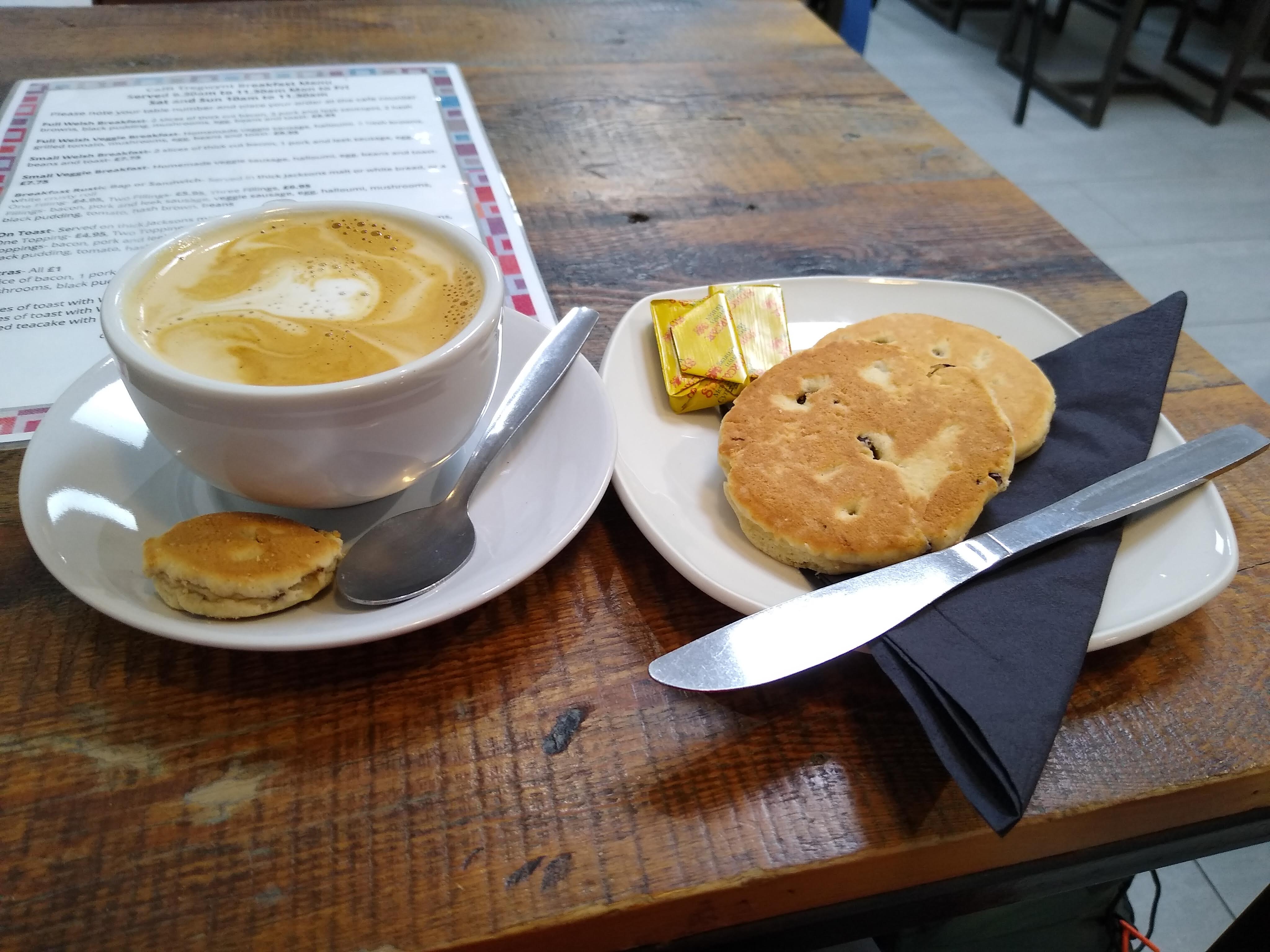
At Melin Tregwynt, which is a historic mill with a visitor centre, there is a café where I had my first encounter with Welsh cuisine in Wales – Welsh cakes. They are basically a flat scone/pancake combination enjoyed with generously spread butter. I had a portion of two plus a mini one gratis that came with my flat white.
Almost instantly the Pembrokeshire Coastal Path brought the maritime gratification I had so long been craving. Vista after vista opened up at every turn. A dramatic and continually surprising coastline within infrastructure supported and used by locals and visitors alike. This was one of the few stretches of the WPW where I felt I was participating in a phenomenon and wasn’t the sole lunatic ploughing an eccentric and illogical furrow over land as yet untilled.
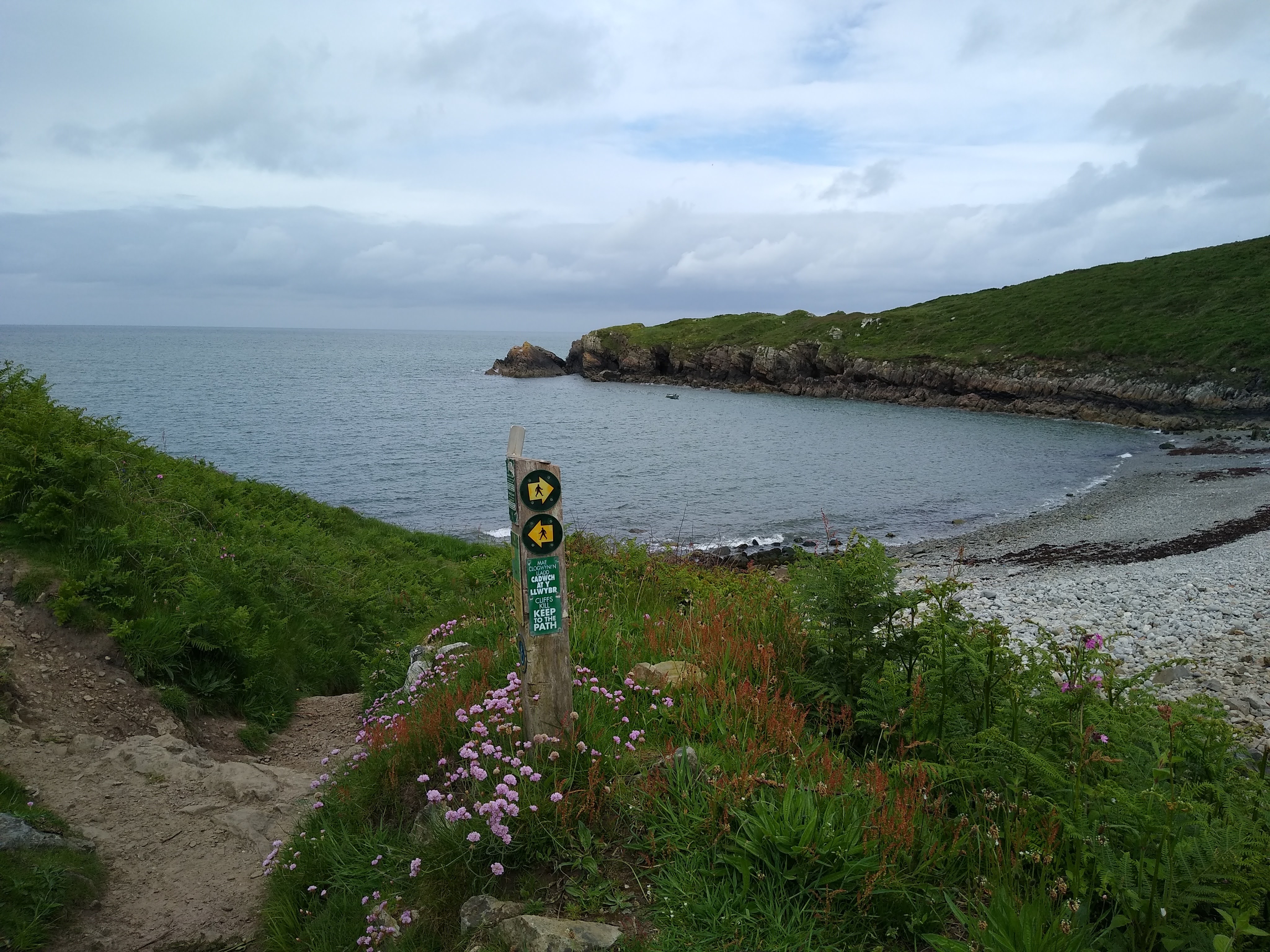
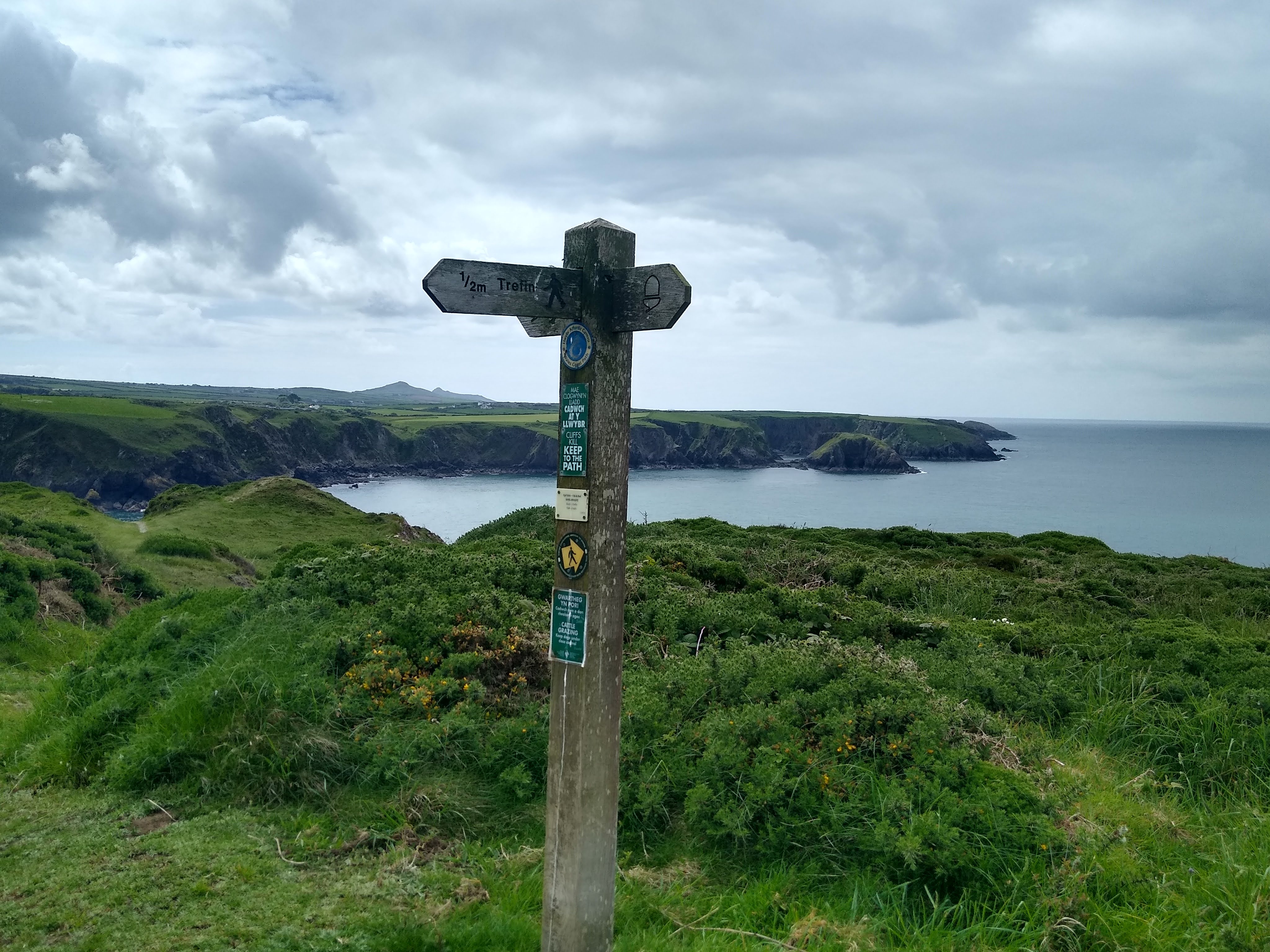

I met an American man who stopped to let me pass. He had done the Cuthbert’s Way – the first longer-distance route he had attempted. Since then he’s been doing them every year. We met a couple of times on the three-hour stint with one stopping and the other catching up. This kind of intermittent companionship was something I had enjoyed on the Cuthbert’s Way; it gives one a feeling of solidarity and collective purpose. It was a shame it had taken until the final day to achieve this.
The PCP was beautiful but also rather exhausting. It doesn’t just skirt along the top of the cliffs but follows their undulation, dropping down into every bay and geo. Three hours was just about all I could manage before I turned to the road again.
The last part of my journey was the most psychologically challenging. It was just road. No turns or junctions to break things up. I stopped more frequently than I had been up until this point.
At around 5pm I arrived in St Davids – the final destination. I headed straight for my accommodation. The cathedral, the WPW’s official endpoint, was another mile into town.
A shower, a coffee and a lie down later, I was ready to face the outside world again. Taking up Zola (always bring a book if going to restaurants alone) I ventured out.
With a population of 1,751, St David’s is the UK’s smallest city. Its cathedral, however, located in the valley of the River Alun, away from the “town centre” is anything but. The scale of the cathedral is astounding compared with the modern-day settlement – yet another place whose significance was much greater in the medieval past than today.
While the cathedral itself is a thing to behold what is arguably even more impressive is the Bishop’s Palace serving as its adjunct. Barring its rooflessness and unfurnished status, the Bishop’s Palace at St David’s is virtually complete. It is impossible to gaze upon it and not be transported back to a time when the Church was at the height of its worldly power. And all so unexpected too! This was the real reward for what began as an excuse to see a bit of the Republic of Ireland and Wales, both of which I’d never visited before.
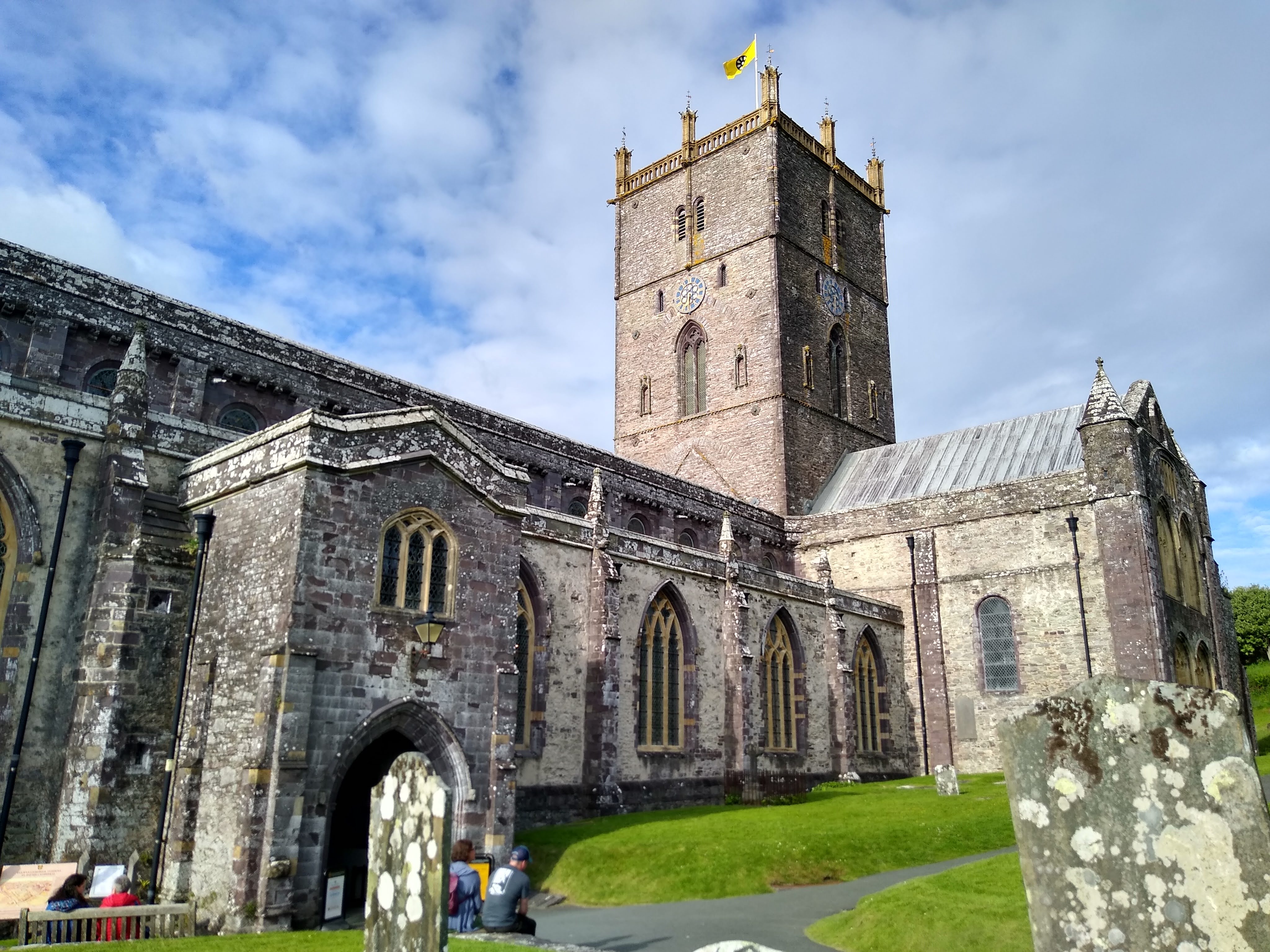
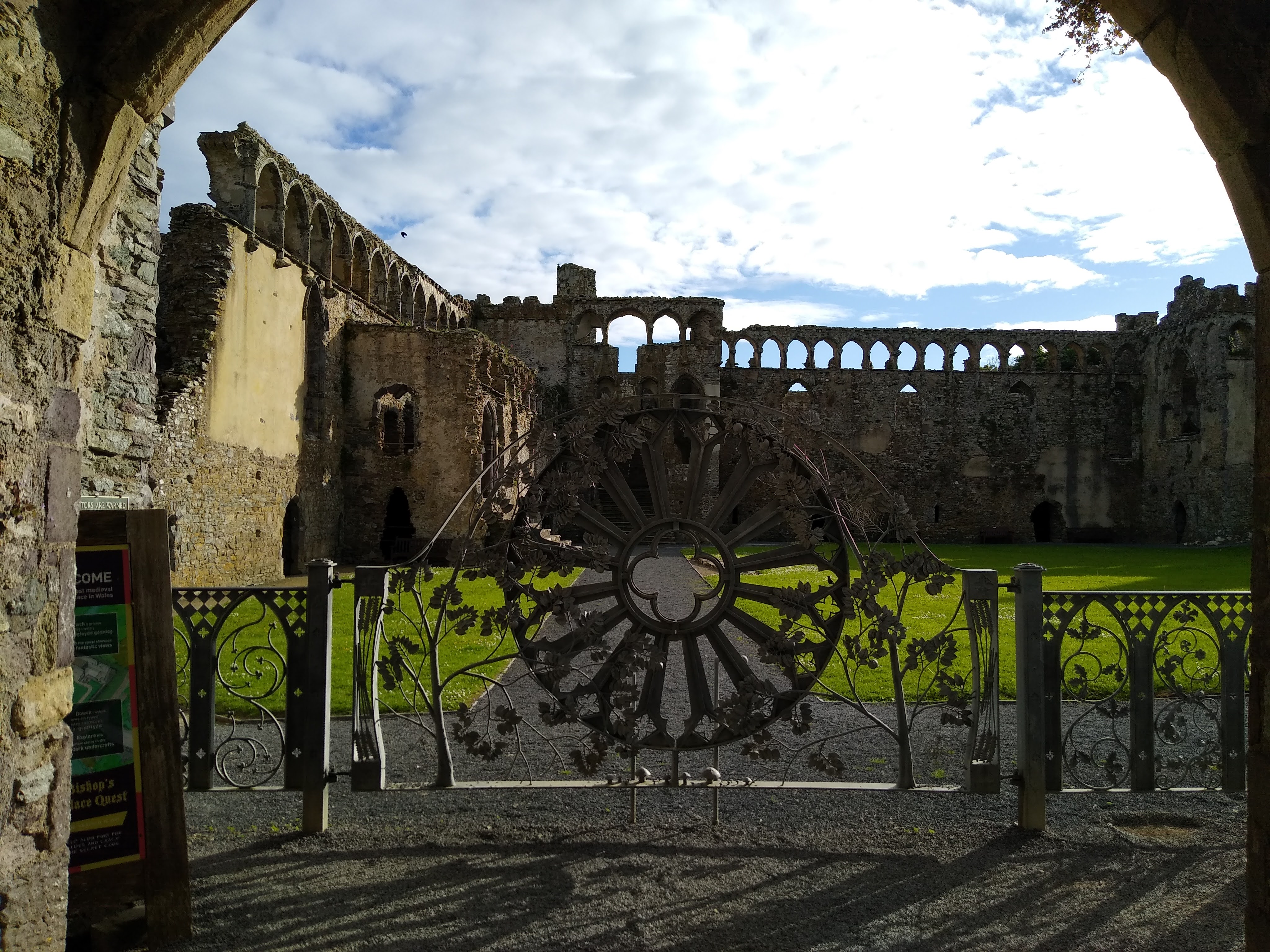
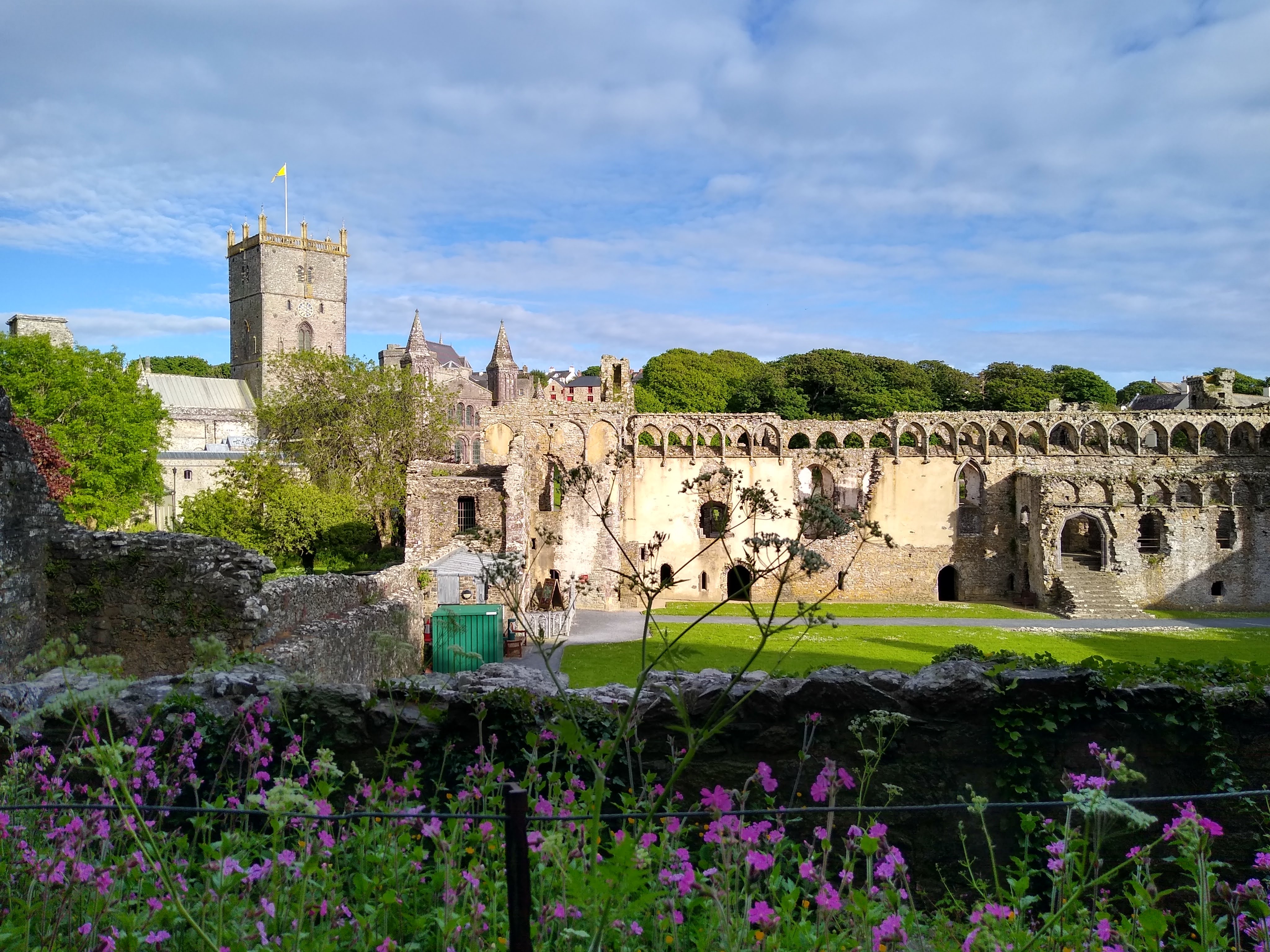
To top it all off, on my way back into town I came across two more re-enactors – St David himself and the Bishop giving a walking tour. I couldn’t help but stop and listen in to hear his tale of his encounter with the Devil himself atop the Cathedral at the tender age of 139. The Devil stole the cathedral bell, flew off the coast and dropped it in the Celtic Sea and if you listen very carefully on a calm night such as this you may well hear it chime *cue the Bishop now several paces away striking a concealed triangle under her robes after a perfectly timed delay*
Zola was not required after all as I met another ~ 50s couple on holiday for the PCP at the restaurant where I was offered to share a table. I engaged in some chat to dispel the awkwardness of enforced proximity.
To conclude, I would recommend Pembrokeshire for the Coastal Path but I think Ireland has some better, more established walking routes that would be more enjoyable than my two days. In particular, there is the Norman Way, including Our Lady’s Island, which I noticed signs for and an official European cycle route along the southern coast.

 Flett-cetera