I wouldn’t exactly recommend the Camino Ingles in England, even though overall it was enjoyable.
The route follows what is thought to be the path taken by pilgrims from the south before they departed from Great Britain and onto mainland Europe on the Santiago de Compostela.
It is not the most well-established of pilgrimages – the English leg I mean – and is far from embedded. The main thing wrong with it is that there is simply too much walking on roads or beside roads. That is not what I want out of a pilgrimage experience.
Because it is not that established or embedded you cannot really call it a phenomenon. The issue is that no one is really doing it with you. I didn’t meet a single person on the Camino who said that’s what they were doing anyway. The only person who said they had was someone right at the start among the ruins of Reading Abbey. She blessed me and told me to collect a pilgrim passport from the Father in St James’s Church. He wished me, “Buen Camino”.

The lady in the Abbey gave me a bit of an idea of what to expect. When I asked if it was fairly well marked out she was slightly hesitant. She said that it was quite overgrown by the River Itchen. She wasn’t wrong – I was fighting through vegetation for considerable stretches on my final day on very narrow paths.
Narrowness is one of the main differences between hiking in England versus Scotland. Whereas in Scotland we have the Right to Roam empowering us to traverse any land apart from a golf course or a dwellinghouse[1], in England one is forced into these resentfully thin corridors, scurrying along like rats in a drain. Speaking of sewer systems – one of the lowlights of Day 3 was in parallel to a sewage processing plant.
These byways and bridleways are a lot better than the alternative though – roads. Walking on the road in the south of England is a far worse experience than in Scotland for one main reason: hedges. You won’t find drystone dykes here or fences for that matter (apart from the barbed wire that often flanked the abovementioned public rights of way between two fields). I’ve recently been reading Klara and the Sun by Kazuo Ishiguro and in it a character fondly describes the England of their youth that they’ve left behind, waxing lyrical about its hedges fixing the fields for evermore versus the impermanence of fences. My perspective is in total opposition to this view. Why praise the immemorial apportionment of land for all time? It is the exclusion of generations for generations.
The hedge represents the inviolable separation between mine and thine in the collective Anglo-psyche. It should be abolished now and for all time.
On a practical level, hedges make walking on B-roads unnecessarily perilous. They eradicate the need for a verge and thus eliminate any refuge for the walker in the face of oncoming vehicles. The fact is, cars are king here even if the situation can primarily be blamed on centuries of agricultural practice since enclosure.
Roads here also frustrated me even when I was not on them. They ruthlessly bisect the countryside, making it almost impossible to get anywhere efficiently on foot without endangering yourself. I am taken back to my geography classes at school, learning about how the logging companies in the rainforest isolate animals so they can no longer roam freely in their habitat, fragmenting ecosystems and turning them into ever-shrinking islands doomed to sink under their lack of interconnectedness. The phrase “wildlife tunnels” comes to mind. There are also apparently “green bridges”. They put them into new motorways so creatures aren’t cut off. All I can think is – I need a wildlife tunnel!
The long and short of it is this: You simply cannot have a pilgrimage experience with the M27 speeding right over your shoulder. If pilgrimage ought to be marked by hospitality, mine was mostly characterised by inhospitable infrastructure both in terms of transport and law towards travellers on foot in the south of England.
That being said…
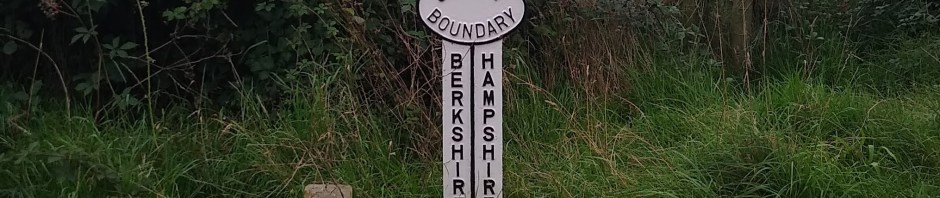
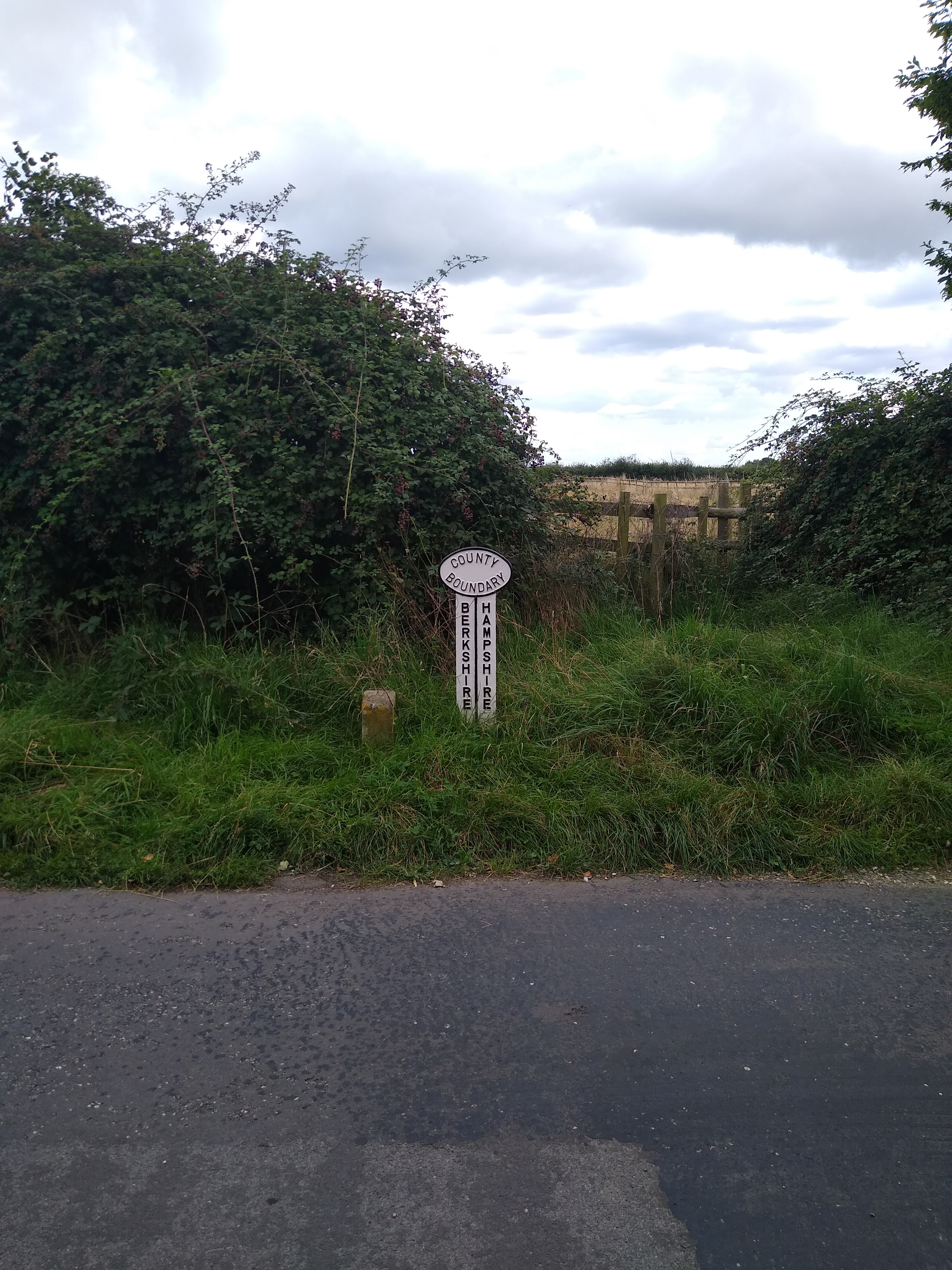
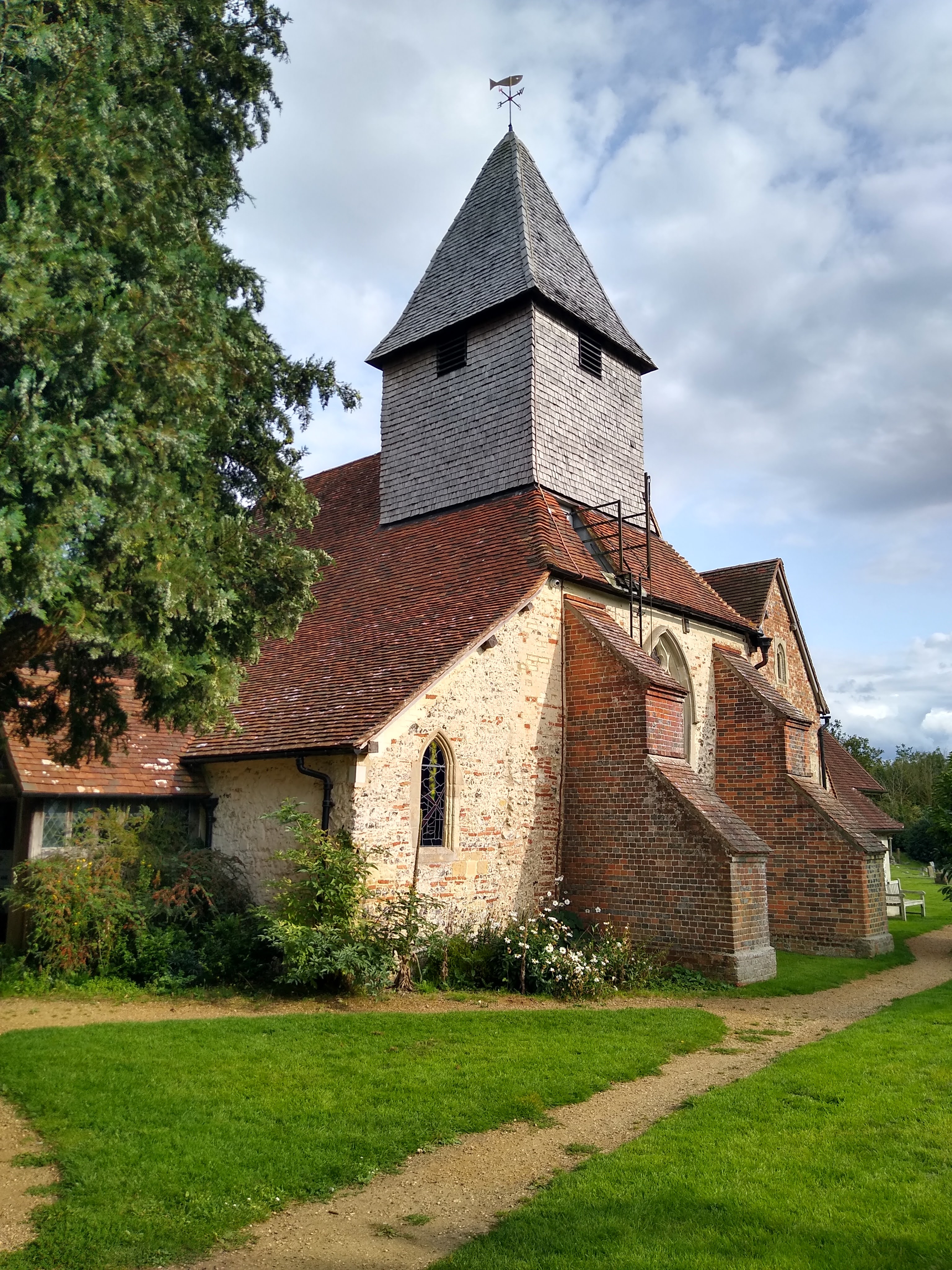
There were highlights. The Church of St Mary the Virgin at the halfway point on Day 1 – a beautiful 12th-century building with painted decoration of the walls that seems to have been spared the reformation. Rejoining the way on the same day after a detour and finding the Berkshire/Hampshire county border like the parish boundaries on the Hammars o Syradale. The Quaker cemetery in Basingstoke whose centrepieces are the shells of ruined chapels and whose winding path is paved with prostrate graves.
Day 2 was unquestionably the worst. Long endless roads. I was led through bridleways to the edge of a dual carriageway across which supposedly a parallel public path lay. It was non-existent. I trudged through nature’s barbed wire – brambles – before giving up and going back on myself for a more accessible route.
Halfway through this deviation from a deviation, I decided I’d get a bus when I could. Easier thought than done. The detour ended only in another stretch of verge-less B-road whose laughably-named termination was Cheesefoot Hill. About a third of the way along this I contemplated the idea of hitchhiking. Before I stooped to this my salvation came in the form of a farmgate layby and a fortuitous vape break.
My deliverance was named Joel and he’d just been at Boomtown Festival, up from Portsmouth. I asked him if he was going to Winchester. He said, I can if you want, mate. He drove me the last few miles to the soundtrack of bling-era 90s rap. I sheepishly paid him a little something for his trouble and disembarked for the Airbnb. All in all, an encapsulating anecdote.
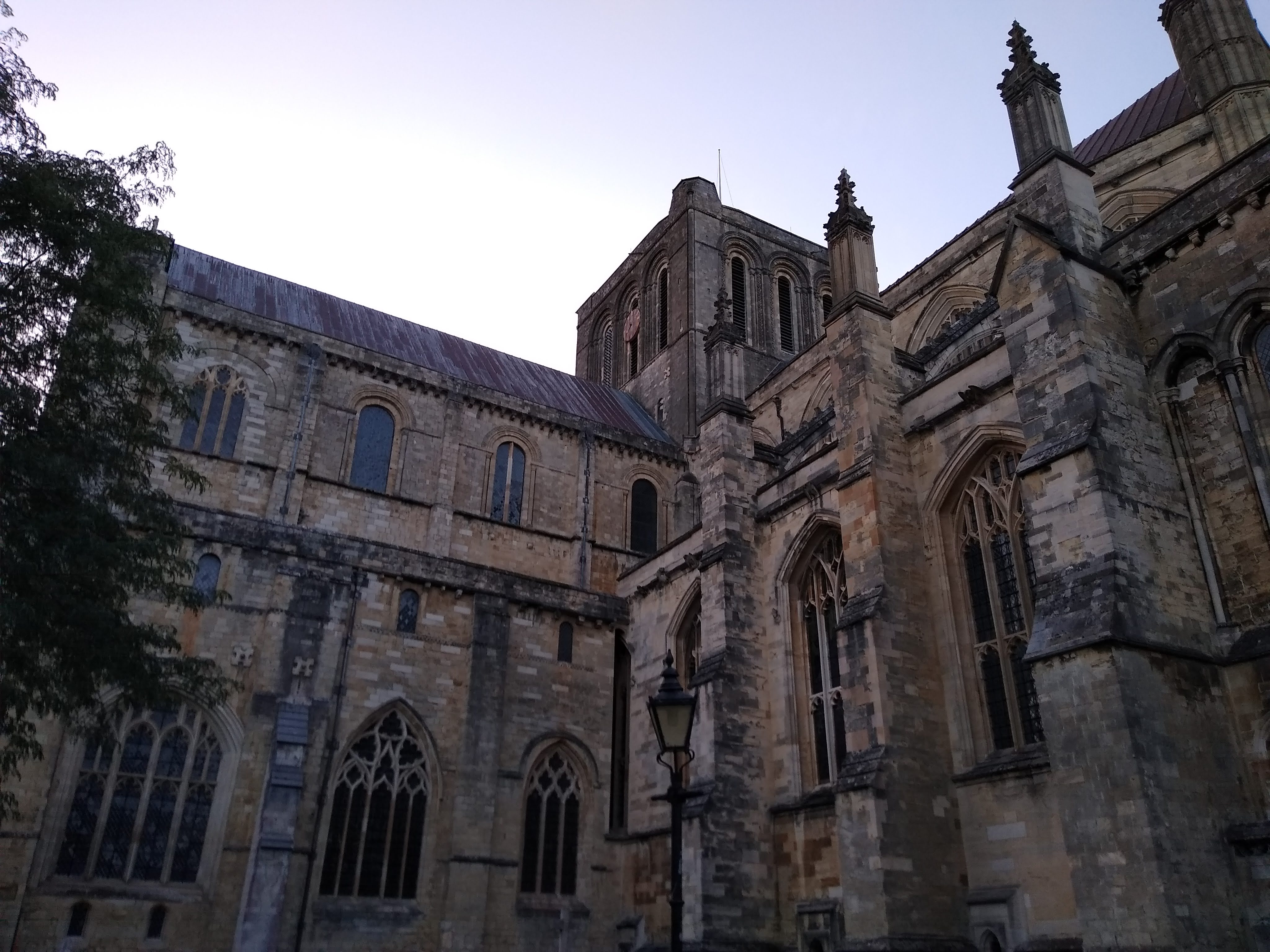
Having calmed down from my ordeal somewhat with a shower and a change of clothes, I ventured out to witness the 2/3-way point of my journey. I’d missed the Winchester Cathedral opening hours by a considerable margin, and tomorrow was Sunday – not for tourists in the morning. No pilgrims toll for me, no bread roll and a cup of beer. No stamp even, for my newly acquired passport.
No matter, I was at ease and content to enjoy the edifice in the last glow of the twilight. My very recent experience of custodial kirk-keeping reconciled me to the circumstances.

The next morning began my favourite stretch of the pilgrimage and had a wonderful start along the River Itchen where it flowed fast and straight through the city. In retrospect, this is perhaps less attributable to the Camino itself than it is to the fact that it is coterminous with the deal more established Itchen Way.
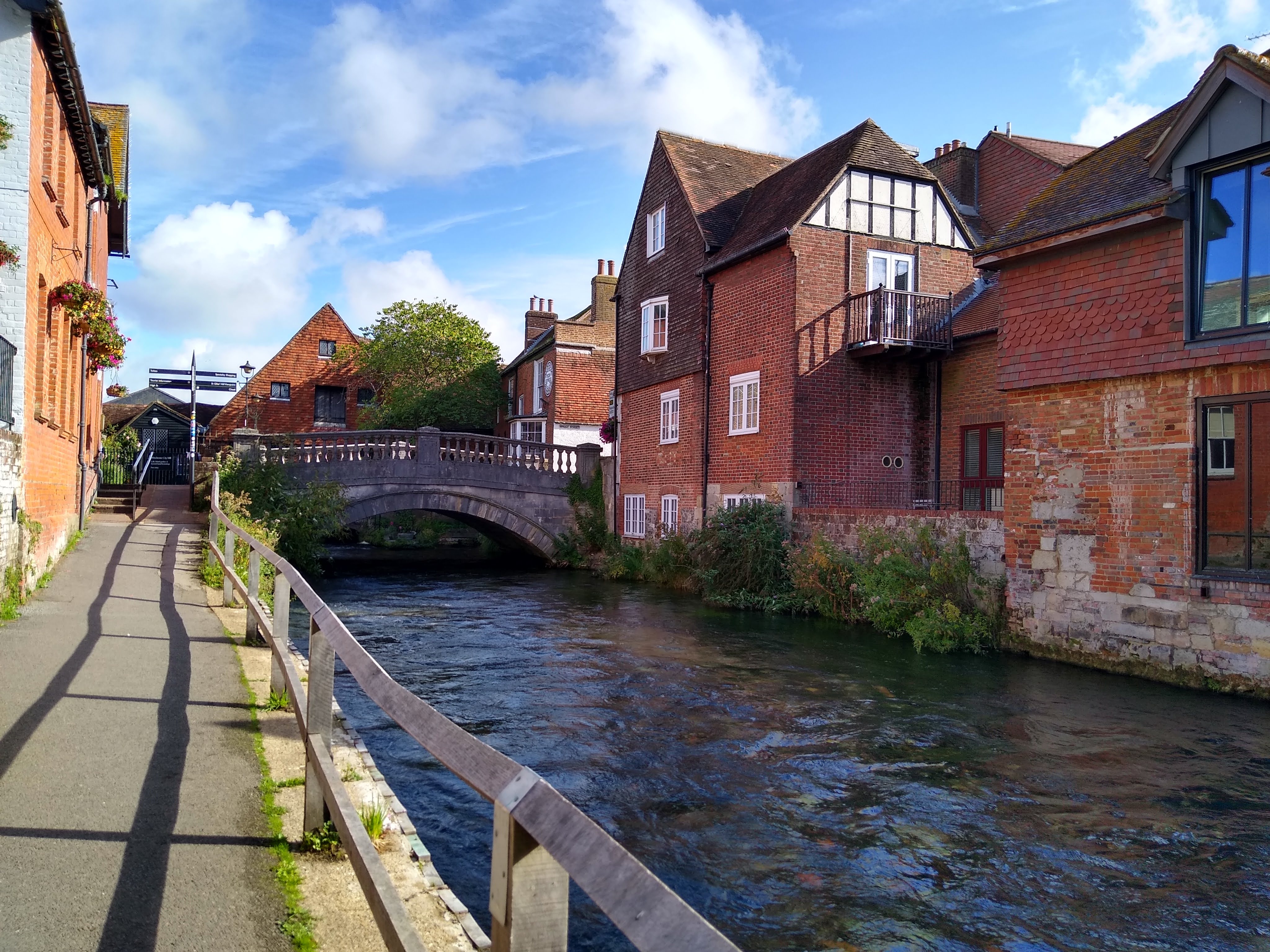

Here I experienced, as I got further along, something of the true solitude I was seeking, as opposed to the loneliness I found on the open road. In patches where I didn’t have to relentlessly concentrate to grapple with greenery and avoid snapping my ankles, I was able to access some of the higher thoughts that these experiences are supposed to lend themselves to. That was until I came across the sewage plant and the M27.
Arriving in Southampton, there really is no definitive end; like a cathedral, for example. I suppose this is because it is really the beginning of a further, much more epic, continental trek. However, before I went I did look up some significant sites and came upon one as I ventured out to find somewhere to eat.
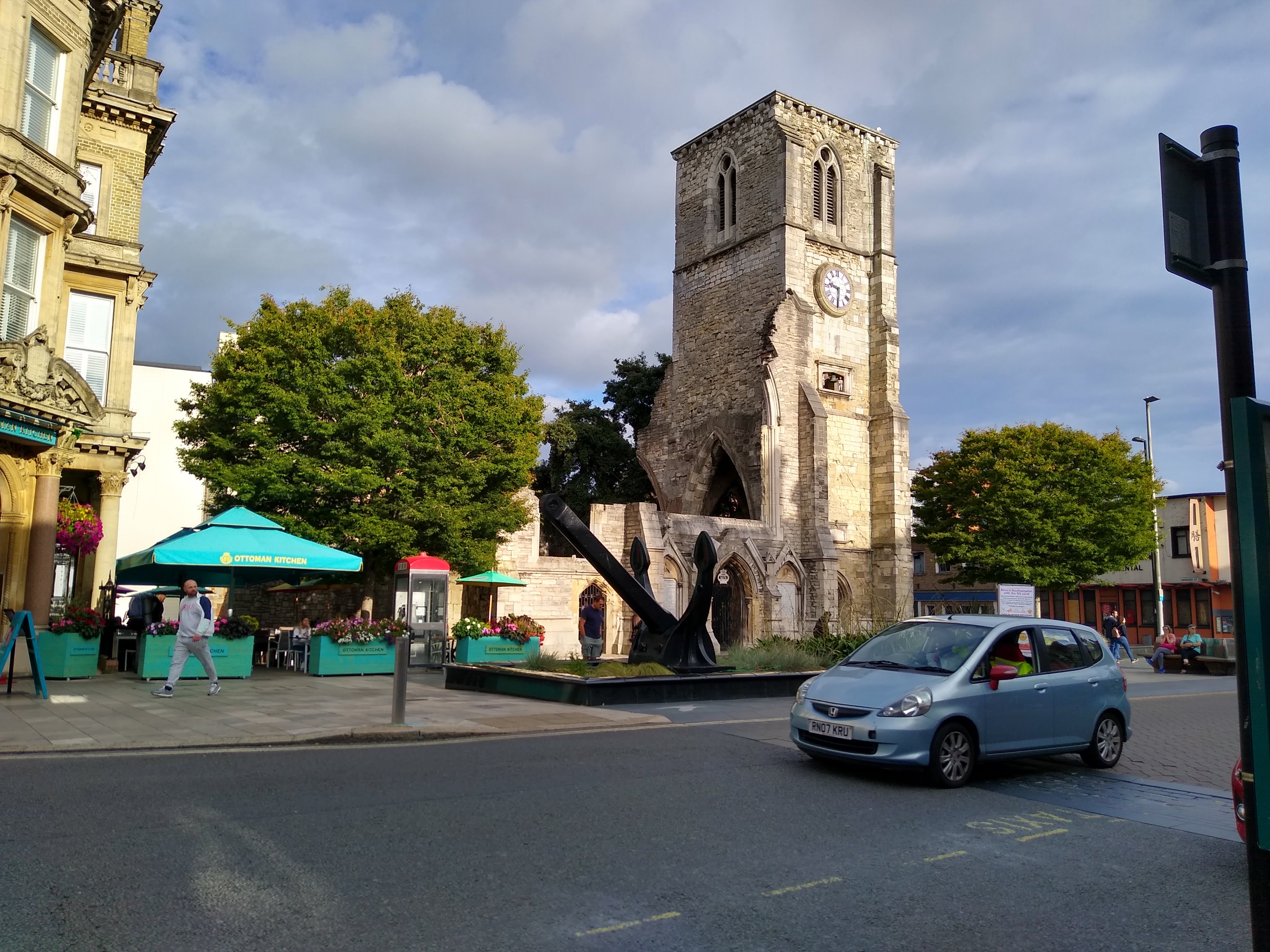
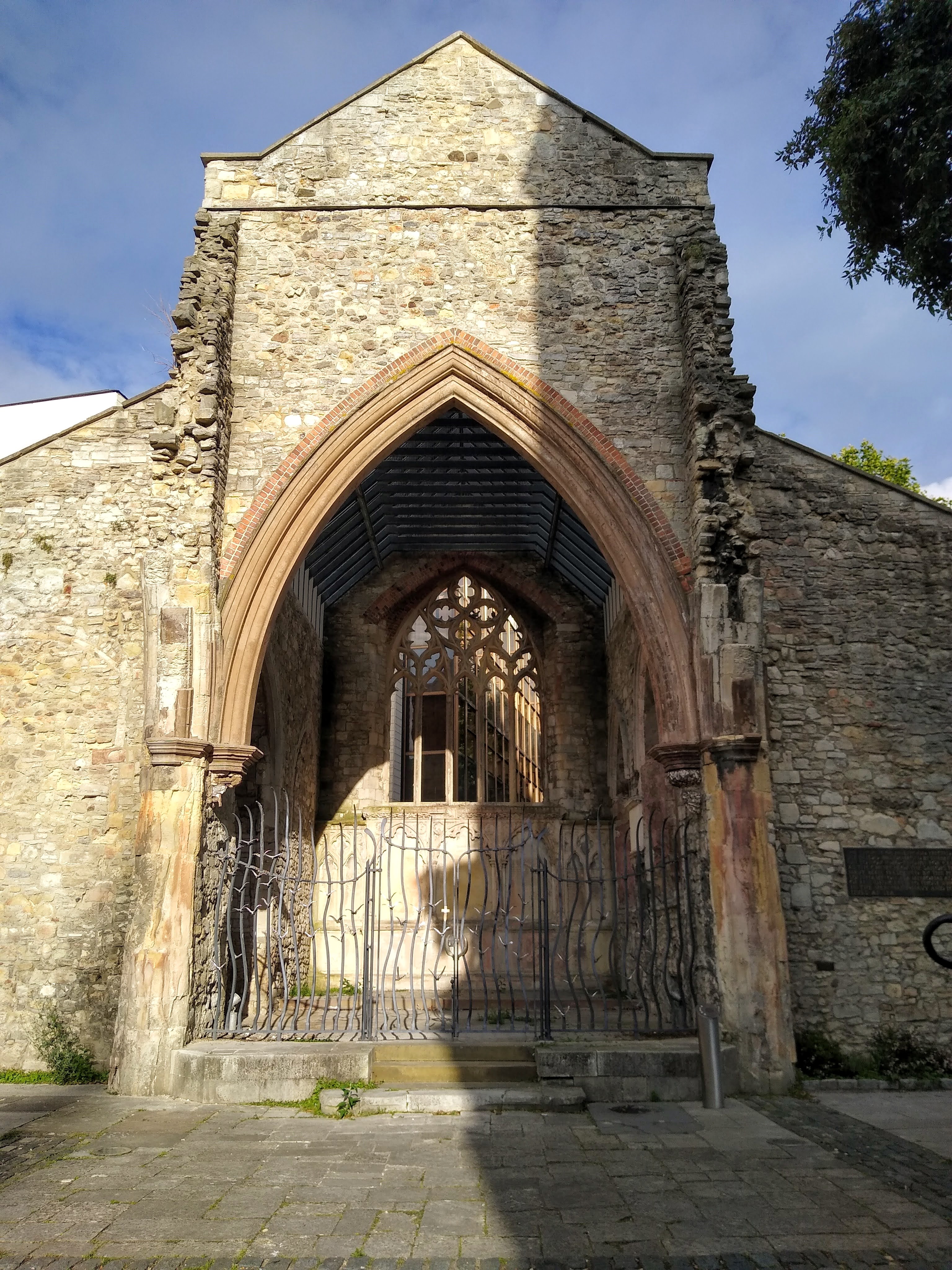
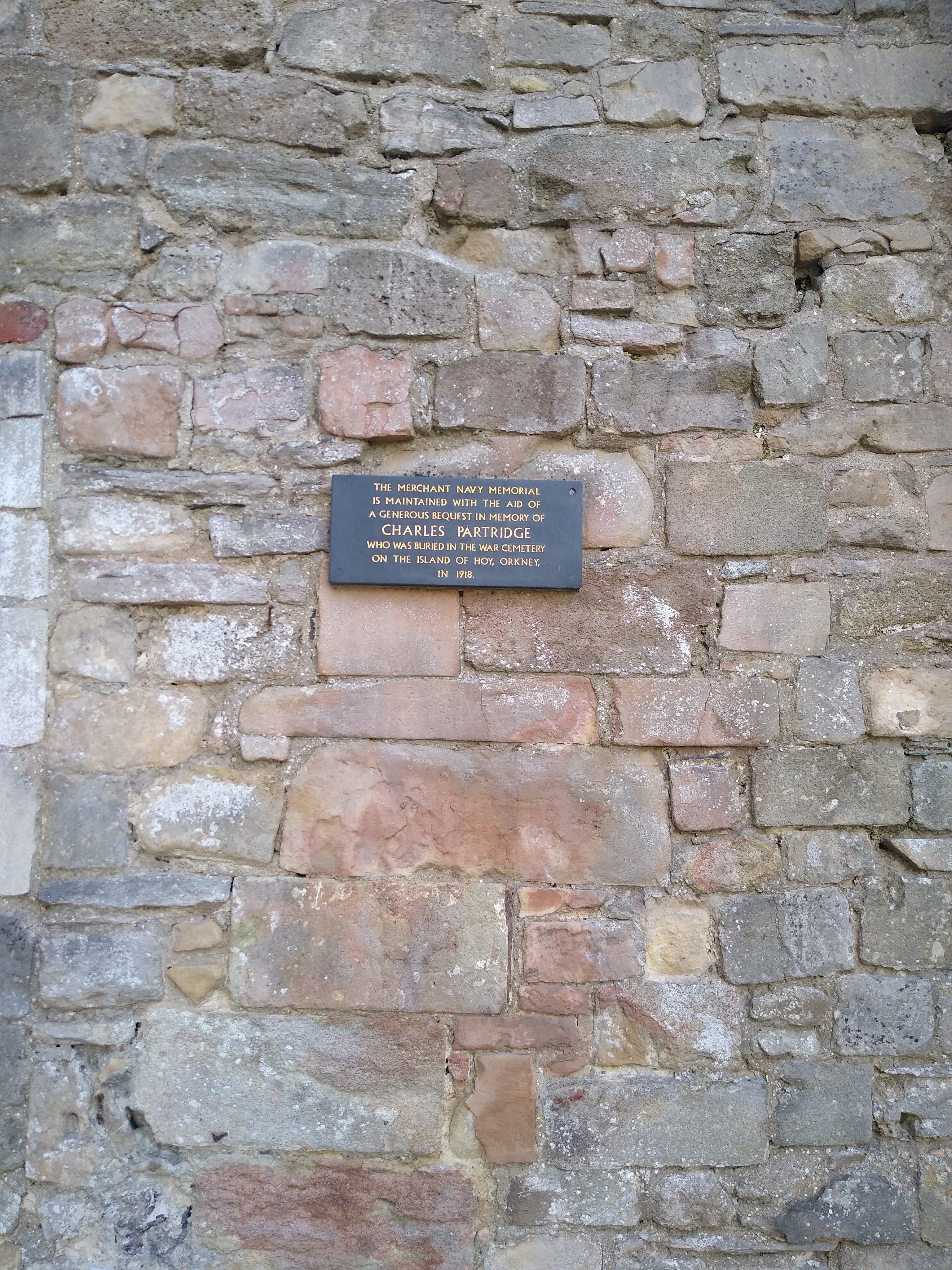
The Church of the Holy Rood is a medieval building, now a shell because of bombing in the Second World War. It has been maintained like this, instead of being swept away, and remains as a monument to those in the merchant navy who lost their lives at sea. In the corner is mounted a plaque – “This memorial is maintained with the aid of a generous bequest in the memory of Charles Partridge who was buried in the war cemetery on the island of Hoy, Orkney in 1918”.
After the self-inflicted ordeal of the preceding three days, I had arrived back where it all started; uncannily aligned with the grief for a foreshortened life that had the power to raise temples.
[1] Obviously a little more complex than this but not much more!

 Flett-cetera
Pingback: The Wexford-Pembrokeshire Way or a Hiberno-Welsh Odyssey | Flett-cetera